A Gift of Scandinavian Fairy Tales

A Christmas in the early 1970s I received from my uncle a book that I cherished for many years until, sadly, I “put the ways of childhood behind me” and lost my gift. It was an illustrated collection of Scandinavian folk tales, stunningly illustrated by Federico Santin in 1962. The art is vibrant, detailed, and slightly atmospheric, often featuring the sweeping landscapes and mythological creatures of the North.
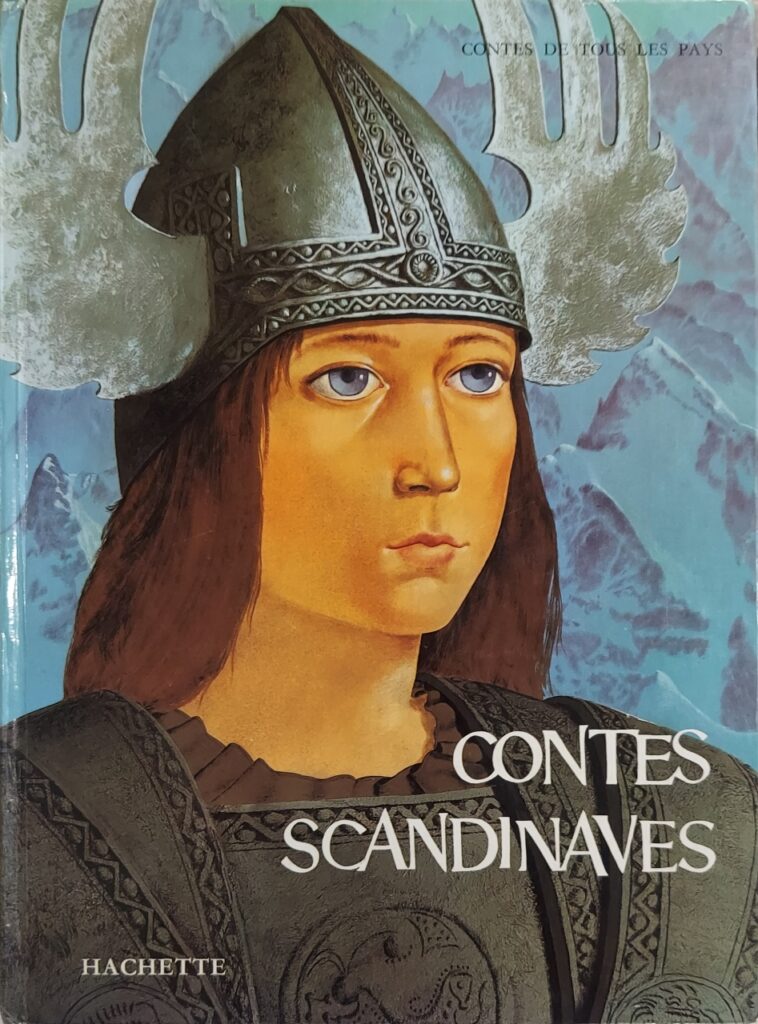
Cover for “Scandinavian Fairy Tales” by Federico Santin, 1962

By a stroke of luck, some forty years later, I was able to purchase a good second-hand copy online (see the picture above).

The beautiful illustrations still fascinate me. They have a mystical luminosity that reminds me a little of the technique of Maxfield Parrish.

I remember how the magical stories in the book captivated me when I was a child. Two of them especially impressed my young imagination.

The first told the story of Olaf, the young son of the Lord of Flagh-Staad. Olaf liked to take long walks by the sea and often rescued helpless animals. One day, he saves a colony of seagulls from the attack of a vicious raptor. He is then led to an enchanted grotto where he meets the king of the elves. The mysterious monarch gives him a precious stone as a reward for his selflessness and bravery, and Olaf hides the gem in the garden of his father’s castle because he is under an oath never to reveal the existence of the elves. 
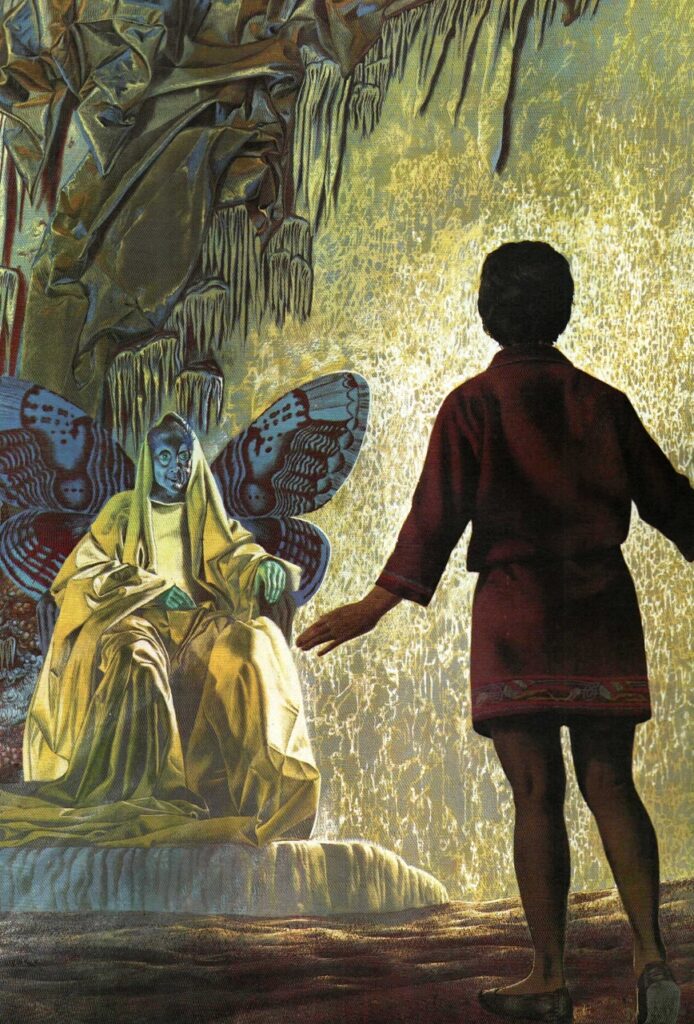
Illustration by Federico Santin for “Olaf and the Giant Eagle” in Scandinavian Fairy Tales, 1962

The other story was that of Nadod, an Icelandic shepherd boy who wanted to fly. One day, he meets a young stranger who, as thanks for the boy’s generous hospitality, offers to help him. The traveler takes the stripling on his horse, and the animal soars through the clouds and above the sea. But that is only part of the journey. Nadod must find the witch who can make his dream come true. Nadod gets his wish but is betrayed by the witch. In the end, he is rescued by his enigmatic benefactor who was the god Thor himself.

Nearly all the tales in the book have magical elements. As a boy, it struck me how those other boys in the stories could interact so easily with the supernatural. It left me for a longing for the divine “other,” a Boy-God who would rescue me from the mundane, take me astride his mount, and carry me away to a fantastical kingdom.
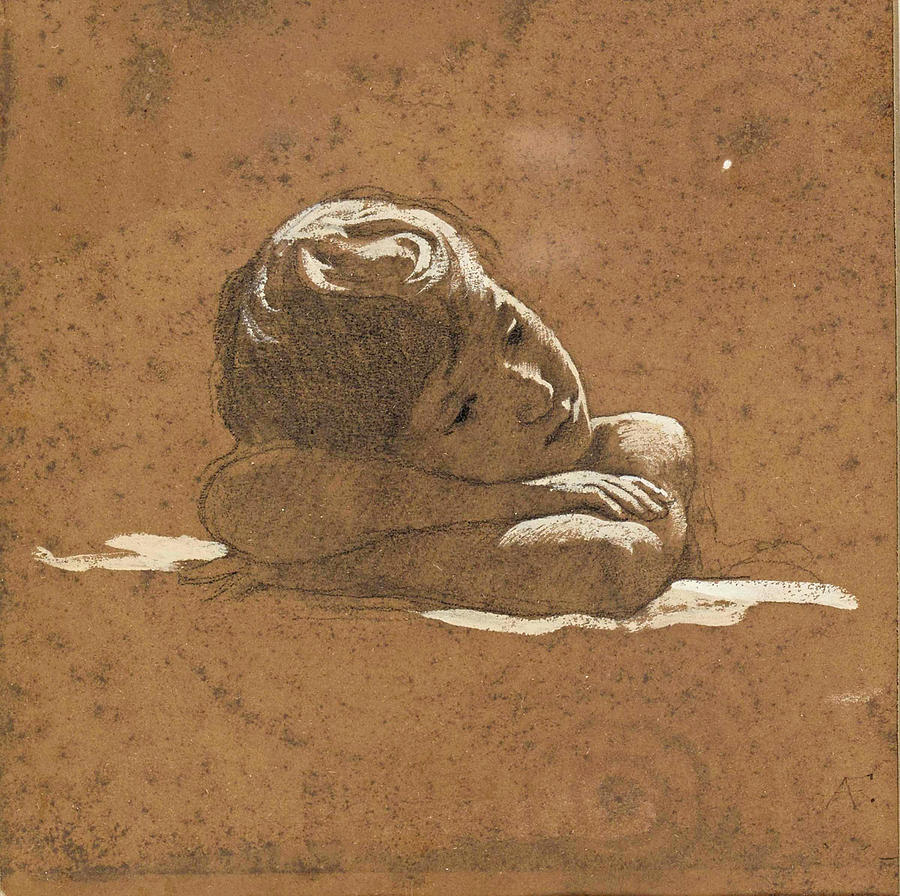
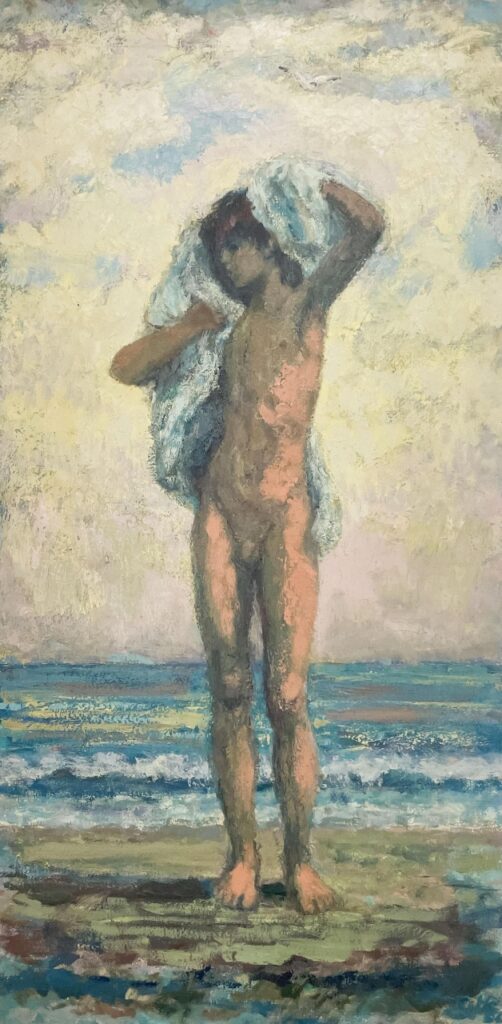
“Head of a Child” by Anselm Feuerbach

Such were the daydreams of a child, of course. And yet my earnest longings, I realized many years later, were symptomatic of something deep and authentic. I came to believe that if one cannot create his own earthly, fossilized reality, we have paradoxically much more control over the fluid aethereality beyond this world. All it takes is a large and consistent measure of childlike imagination to reconnect with the numen within us, which is the key to a kingdom of our own.
Posted in Art, Literature | Tagged , | Leave a comment

Cupid in Disguise

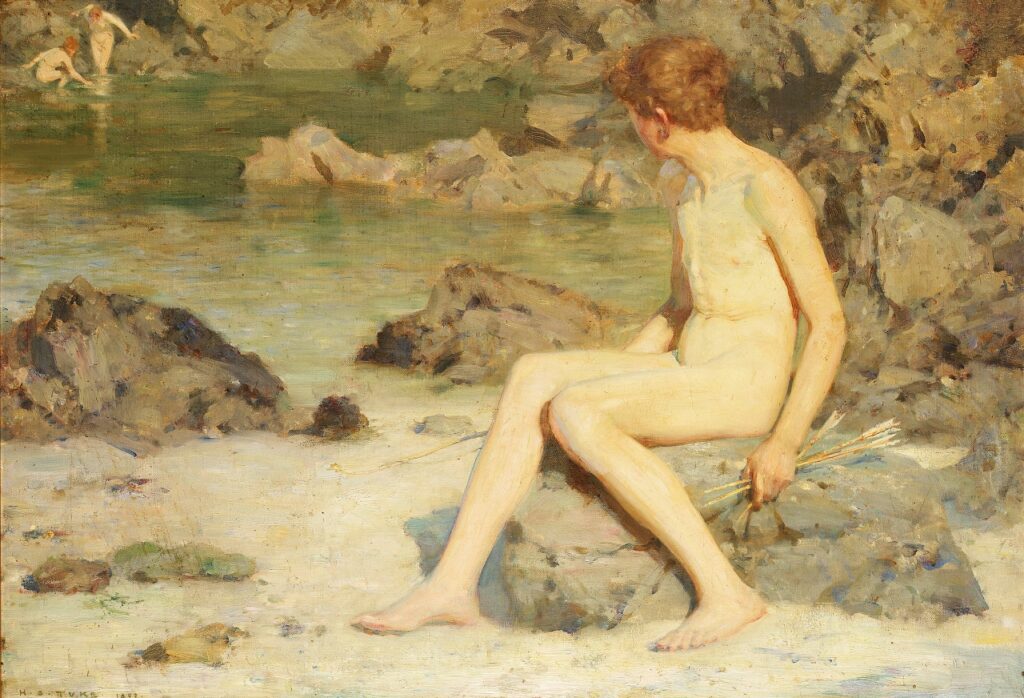
Cupid in disguise is the Boy-God Eros without his wings. That is, he has lost his freedom and the capacity to ascend. He is now only a boy, a prisoner of the materialistic world. No longer worshipped, his image has been reduced to the mundane.

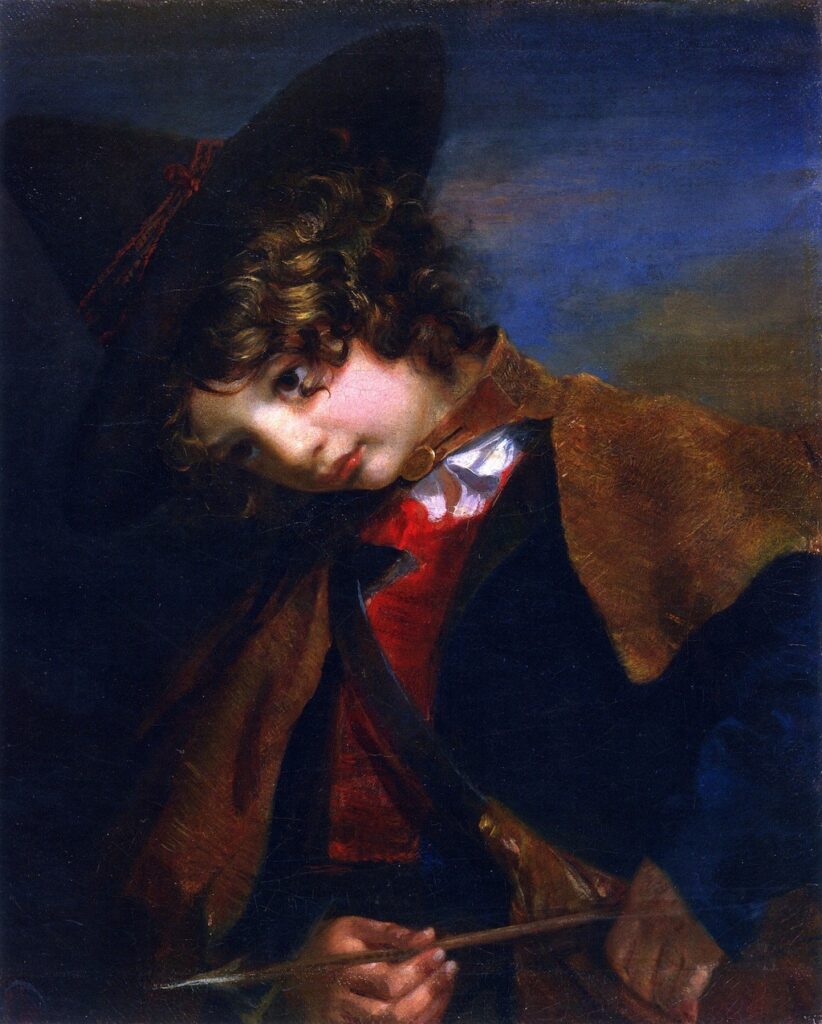
James Edward Freeman, Cupid Disguised as a Roman Shepherd Boy, 1842

However, Cupid has not lost all his powers, even in exile. He still has an arrow or two, the emblem of his ability to touch the human soul. He is the divine spark of desire in all of us, waiting to be awakened and nurtured so that he may recover his original numinosity and become, at last, the liberator of our soul.

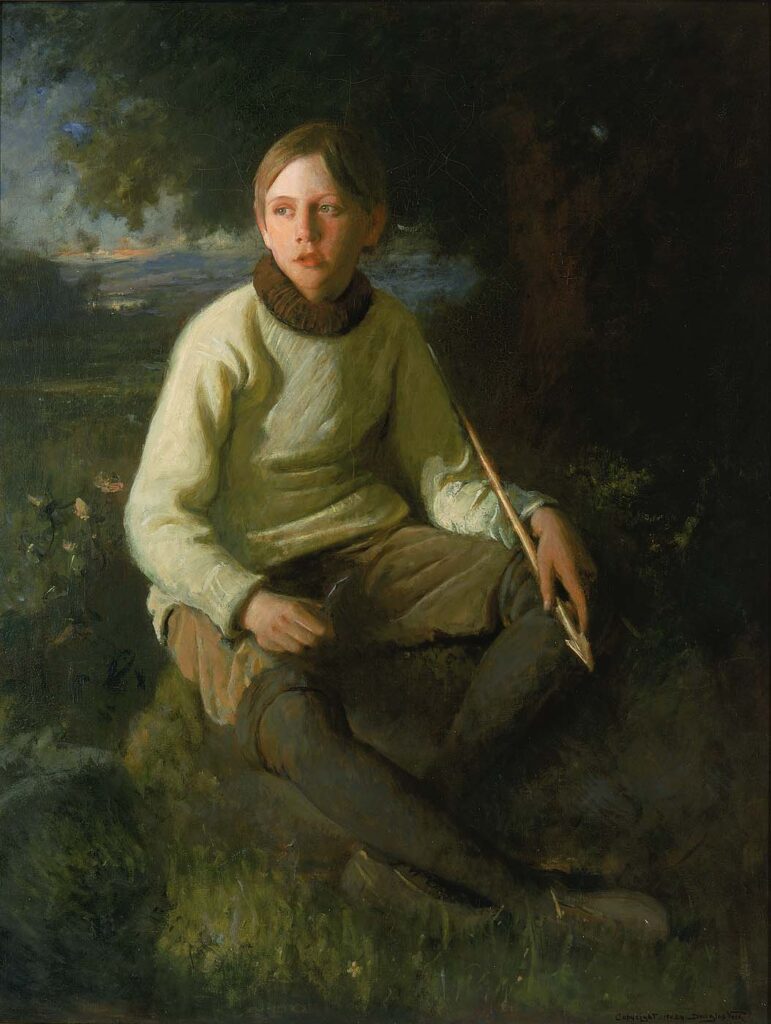
The Boy with the Arrow by Douglas Volk, 1903
Henry Scott Tuke, Cupid and Sea Nymphs, 1899

Posted in Art | Tagged | Leave a comment

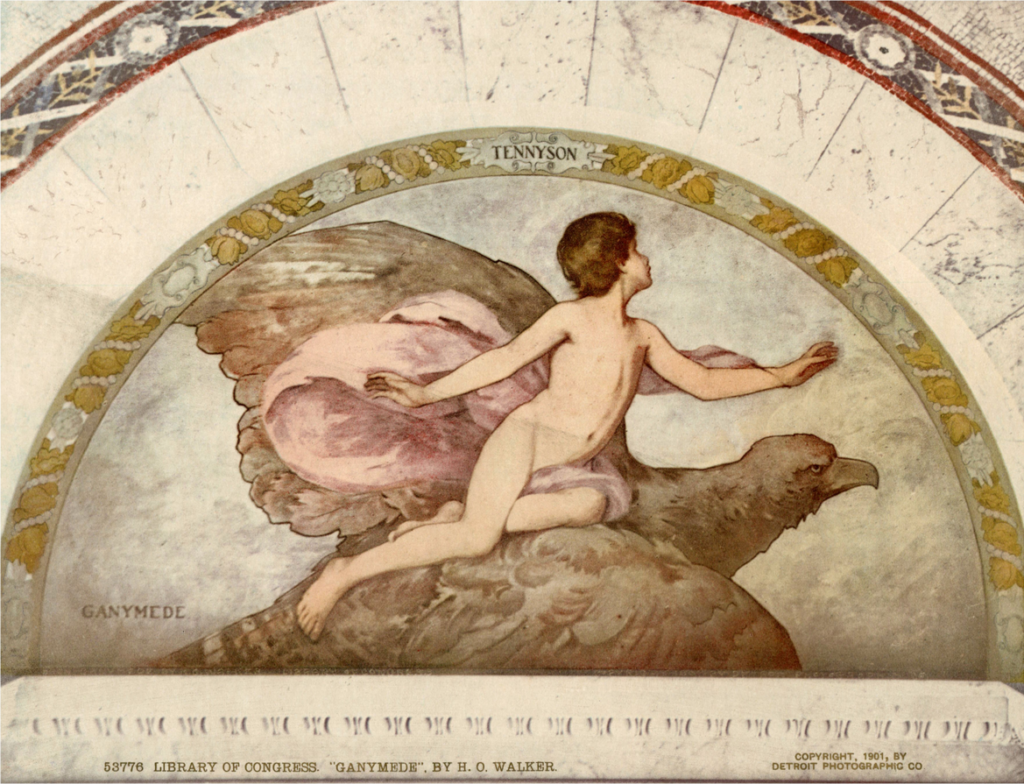
The Boy Who Would Be Immortal: the story of Ganymede

Before the Achaeans launched their tragic war on Troy, there lived a Trojan prince of such breathtaking beauty that he was said to be the most handsome of all mortals.

“The Boy Ganymede” by Geoffrey Hamilton Rhoades, 1966

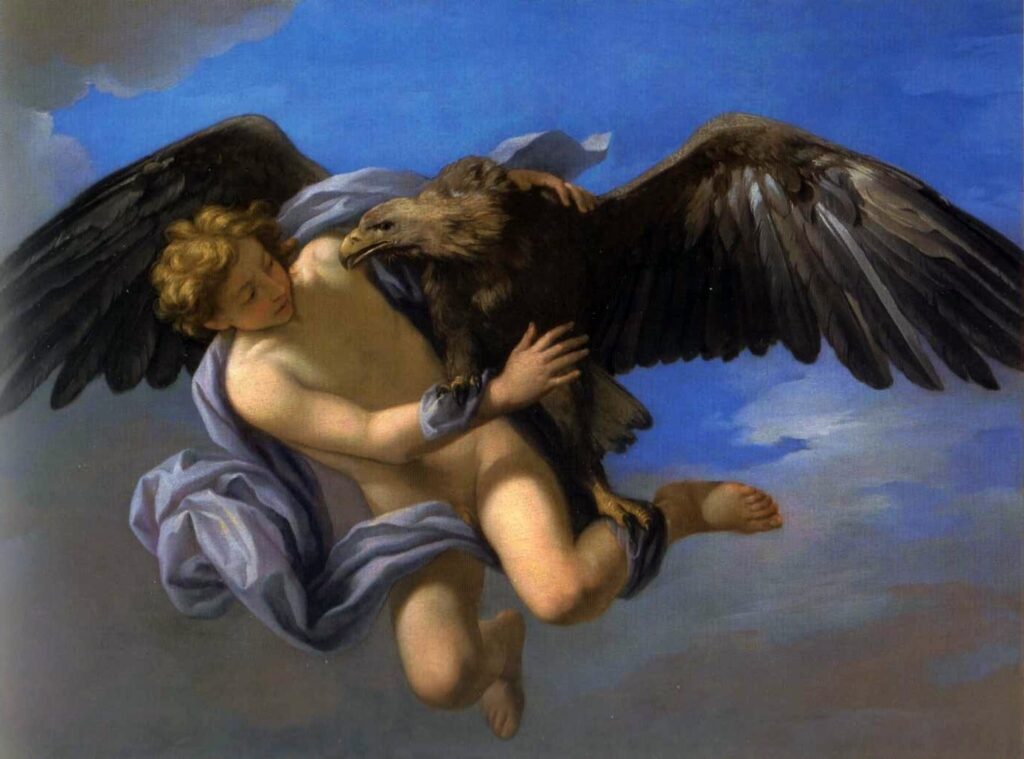
One day, while the radiant youth was tending his father’s flocks on the slopes of Mount Ida, Zeus, ever susceptible to beauty, saw the shepherd boy and was instantly enamored. Unable to contain his desire, the king of the gods disguised himself as a great eagle (or, in some versions, sent the eagle as his agent), swooped down from the heavens, and snatched the young prince, carrying him away to Mount Olympus.

“The Abduction of Ganymede” by Anton Domenico Gabbiani, 1700

Ganymede’s family was left in despair. His father, King Tros, mourned his son as if he were dead. Zeus, however, was not without a sense of divine compensation. He sent Hermes, the messenger god, to comfort the king with a gift: a pair of immortal horses, the very same that carried the gods themselves, and a golden vine. Hermes assured Tros that his son was now immortal and lived among the gods.

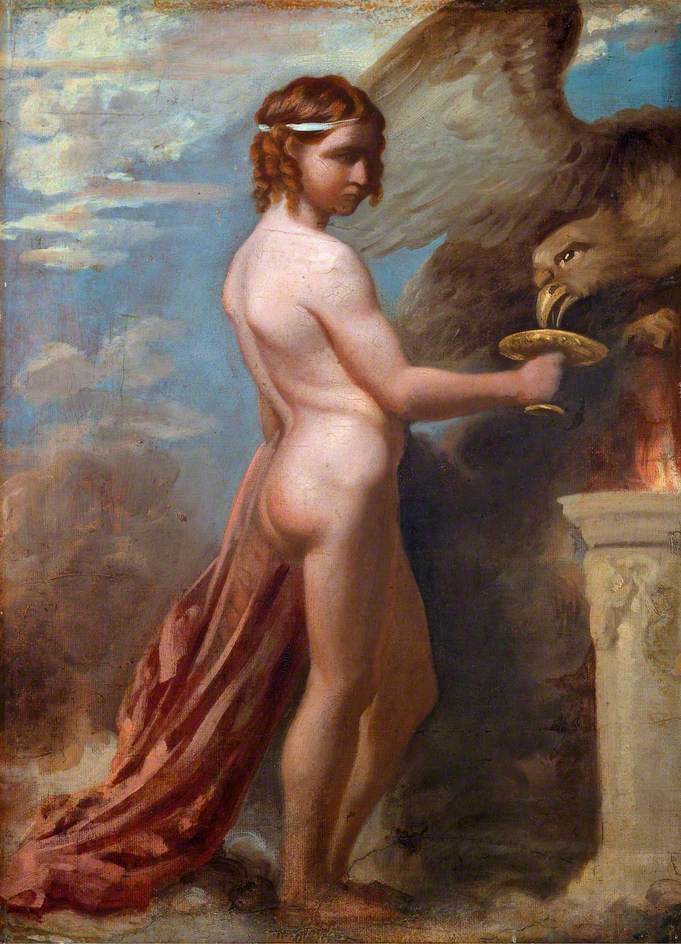
“Ganymede Feeding the Eagle” by Richard Evans, circa 1822

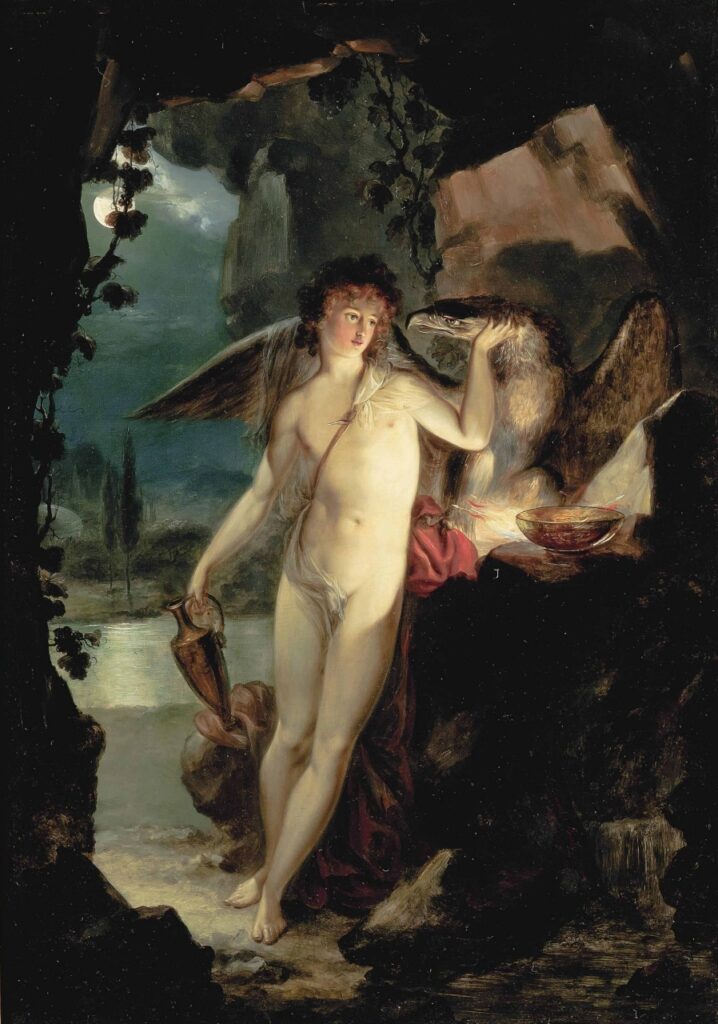
On Olympus, Ganymede took on a role of immense honor. He became an immortal, the cupbearer to the gods, and Zeus’s lover. In this position, he served the divine nectar and ambrosia at their celestial feasts, an eternal symbol of youth and beauty. As a final mark of his esteem, Zeus set the boy’s image among the stars as the constellation Aquarius, the water-bearer.

“Ganymed” by Peter Edward Stroehling, 1801

The Platonic Ideal: Beauty and the Soul

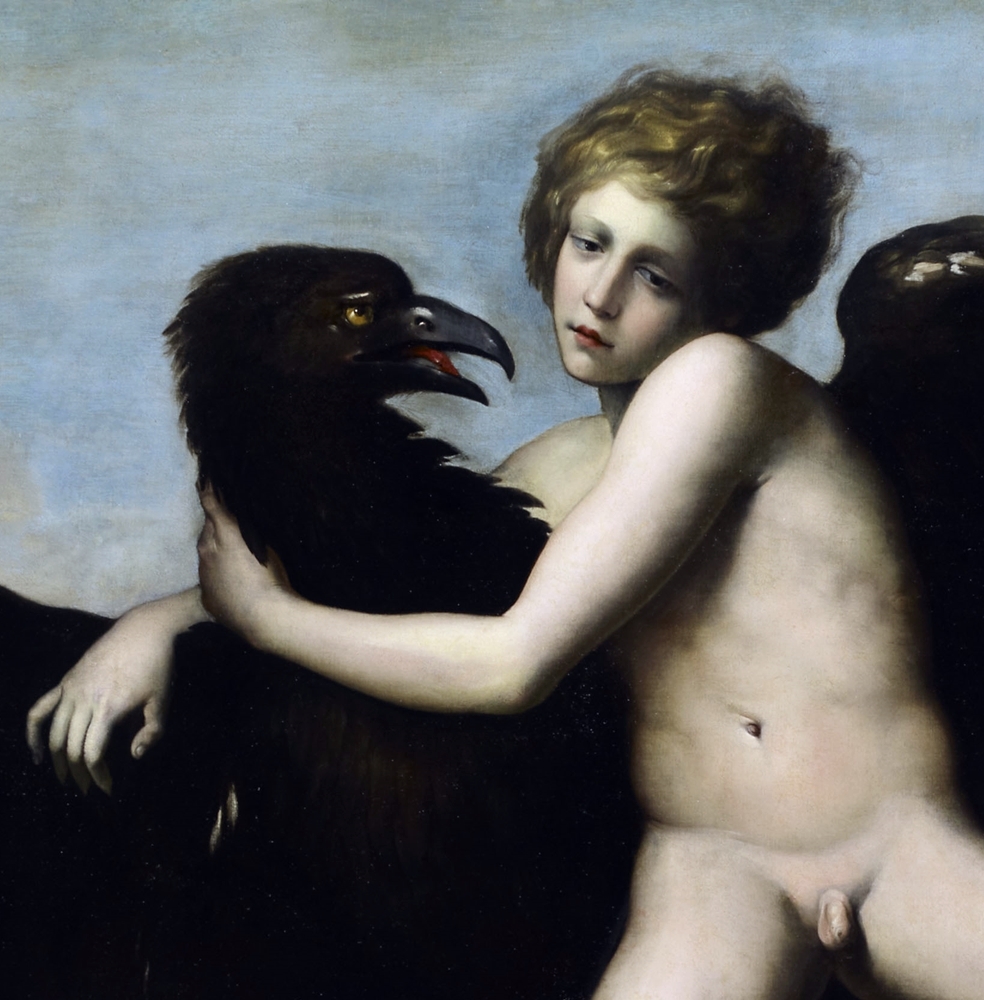
The philosopher Plato, in his dialogue Phaedrus, offers a metaphysical interpretation of the myth. He reimagines the story not as a physical abduction but as a metaphor for the soul’s ascent toward true beauty.

“Abduction of Ganymede” (detail) by Tuscan Painter active in Rome circa 1615-20

For Plato, the love (eros) inspired by a beautiful boy is the first step on a ladder of love. The sight of beauty on earth awakens the soul’s memory of true, divine Beauty, which it knew before birth. The lover’s desire is not merely for the boy’s body, but for the perfect Form of Beauty that he reflects. Zeus’s seizure of Ganymede becomes an allegory for the way divine inspiration seizes the philosopher-mystic, lifting him from the mundane world toward a higher, spiritual reality.

Posted in Art | Tagged , , | Leave a comment

Twilight of the Divine Boy

There was a time when the face of the divine wasn’t a bearded patriarch, a pregnant goddess, an abstract force or a nebulous consciousness. Instead, it was a boy.

Woodcut by Ralph Chubb for his book “Epic Flames of Sunrise”

In the ancient world, the Divine Boy—puer aeternus—could as readily be the center of spiritual devotion, the purveyor of ecstasy. He was the embodiment of creative desire, the raw spark of life, the generative seed.

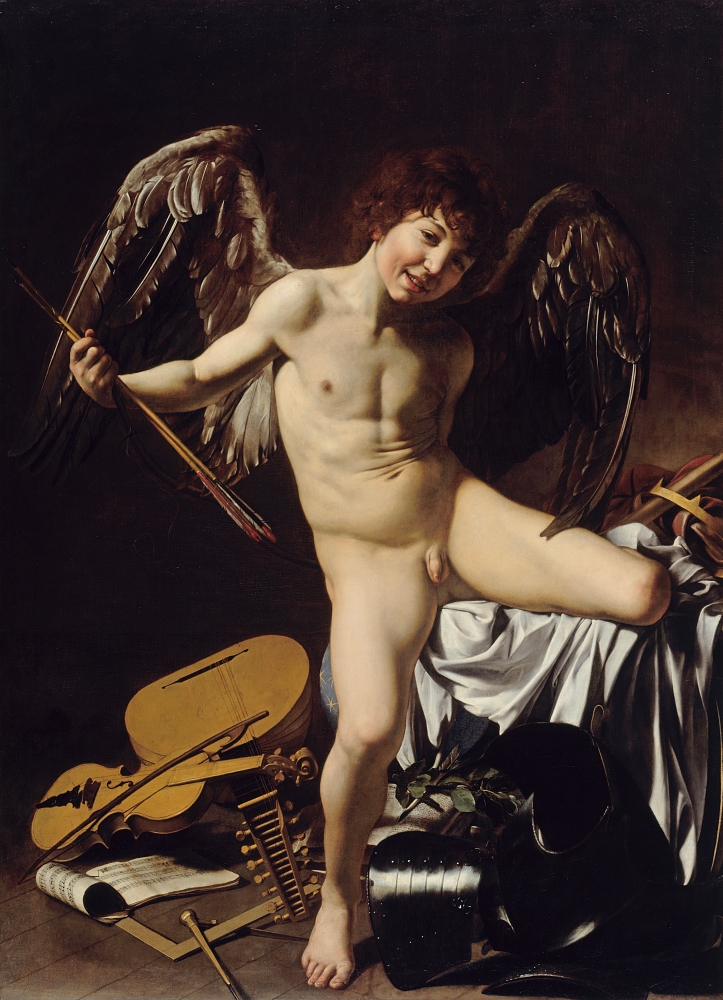
“Amor Vincit Omnia” by Caravaggio, 1601-02

But in place of the spontaneity and vitality of divine boyhood, we have substituted the severity of a courtroom with its rigid structures and laws for everything. Hence the self-preoccupied Grand Architect has supplanted the fleshy, sensual Boy-God, but only in the outer, material world and in the minds of its denizens. For in the human heart He lives still, only awaiting the hour of His éveil and nurture, that He may grow powerful in fulfilling His potential as Liberator of those who worship Him.

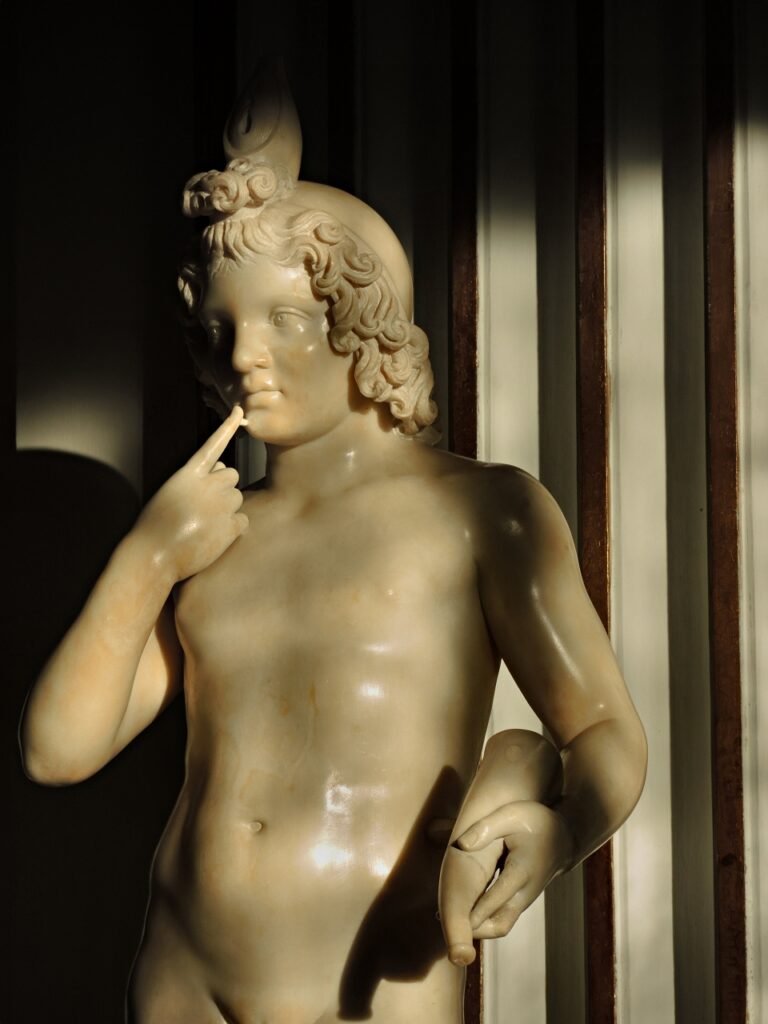
Photography by Giovanni Rivetti

Posted in Art | Tagged , , , , | Leave a comment

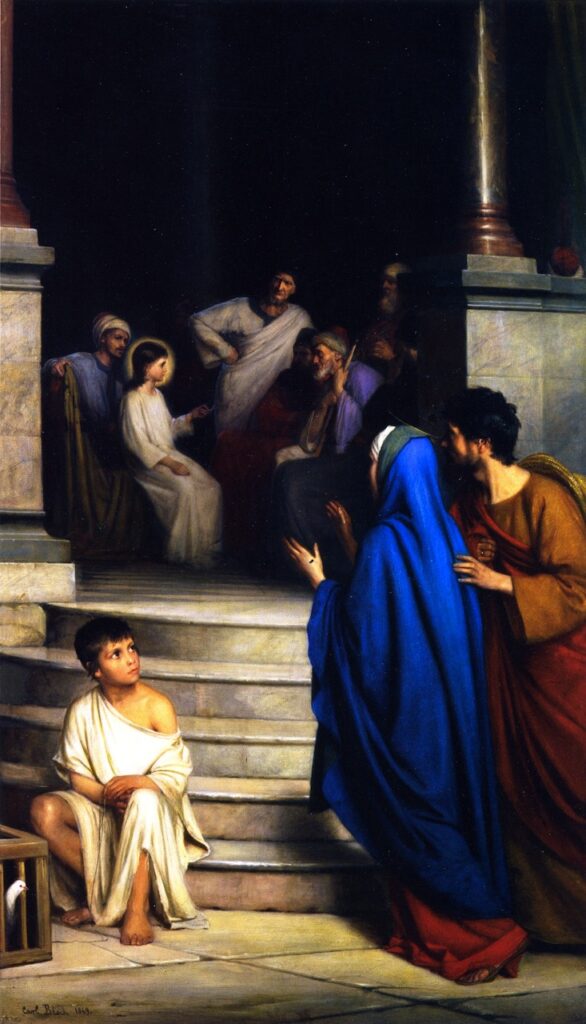
Unlocking Hidden Motifs in Jesus’s Childhood Scene by Carl Heinrich Bloch

Once you become familiar with the mysteriosophy of the Divine Twin (as articulated in my book), you start recognizing patterns in art and literature that reflect its core tenets. In creative endeavors, an author’s original intent is often supplanted by a meaning that exists beyond their own conscious mind. Artists, poets, and writers are not always aware of the “unintended” truths that surreptitiously infiltrate their creations from an otherworldly spring of creativity. For that reason, creators are often not the best interpreters of their creations.

The esotericist’s task is to unveil these subtexts and bring hidden motifs to light. This is the scrutiny I want to cast on a painting of the young Jesus by Carl Heinrich Bloch. This work is part of a series of twenty-three classical canvases on the life of Christ; it is unlikely the artist intended anything more than a realistic rendering of the Gospel story found in Luke 2:46.

While the subject matter seems traditional, the composition reveals noteworthy details regarding the dynamics between the human soul and her “savior-twin.” The scene depicts the twelve-year-old Jesus conversing with learned men in the Temple—which, in esoteric thought, represents the human body (see John 2:19-21 and 1 Corinthians 6:19), the house of both soul and Spirit.

Continue reading
Posted in Art | Tagged , , | Leave a comment