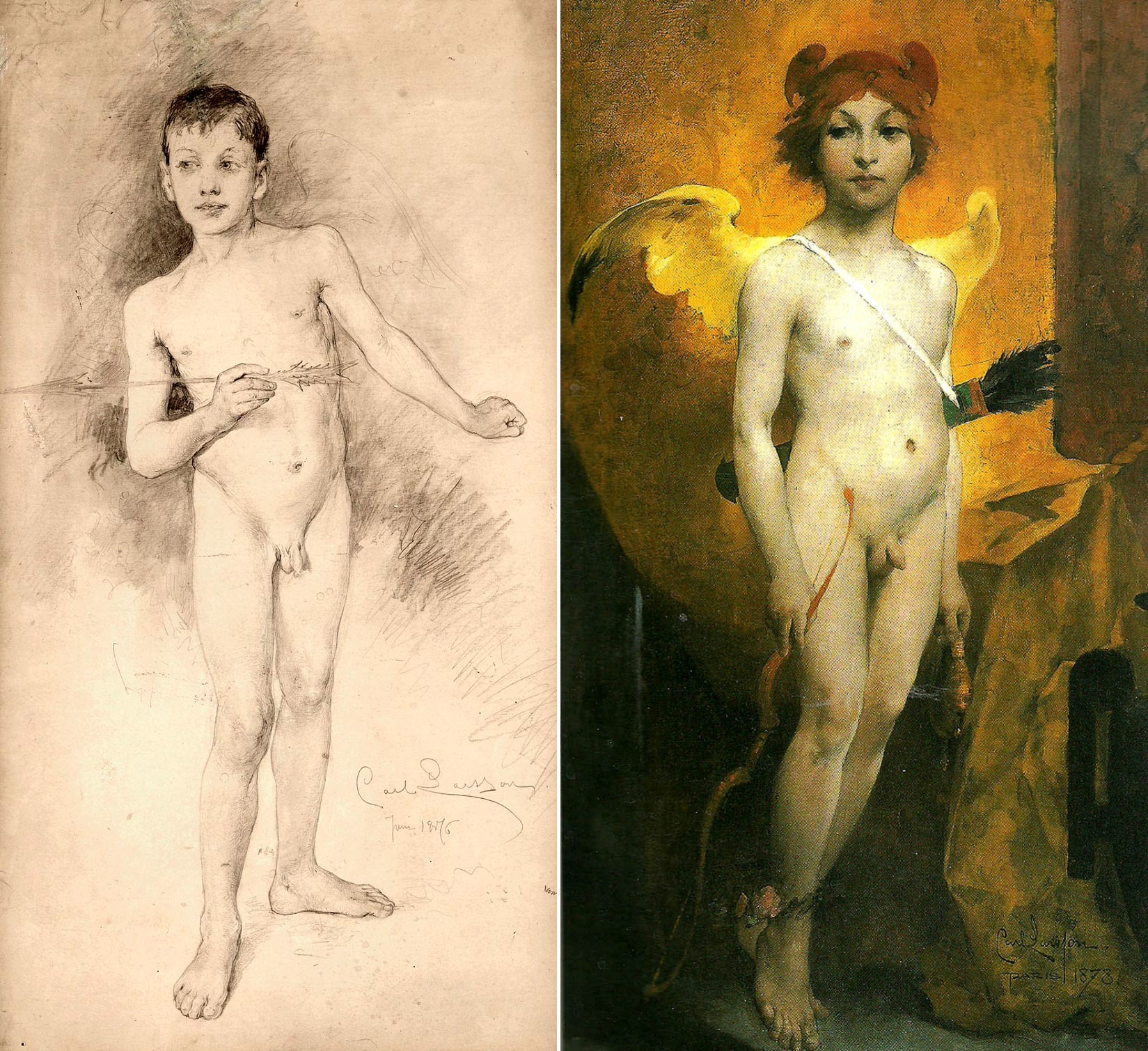
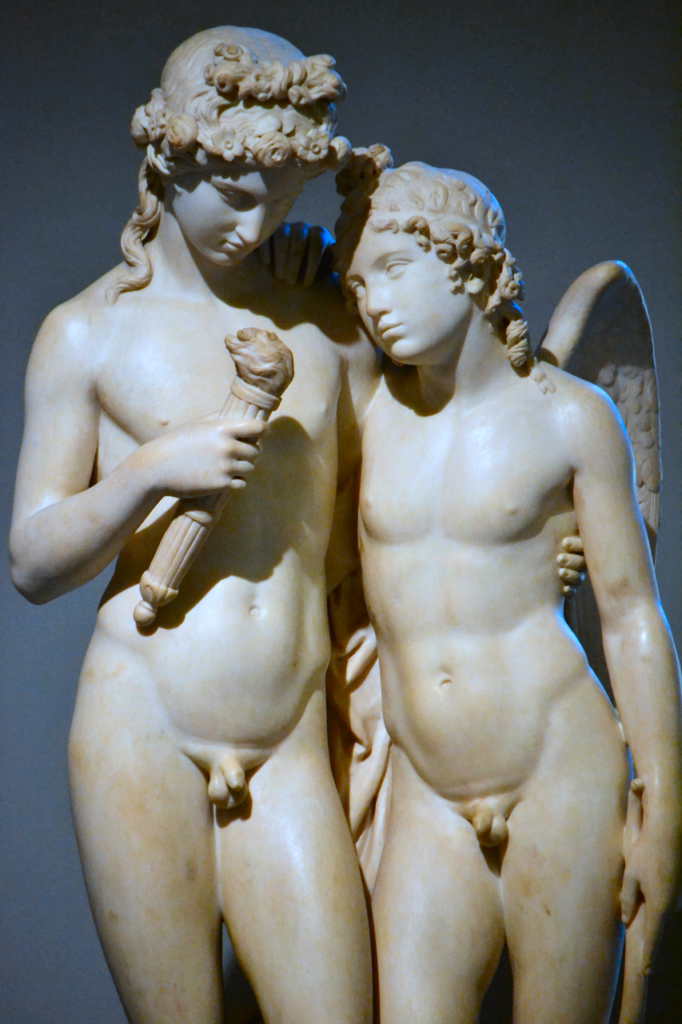
Swedish Painter Carl Olof Larsson (1853-1919) reimagined the little god Eros, assimilating him with Hermes (on the right).
Already, in Hellenistic and Renaissance art, there was a recurring motif of Eros borrowing the attributes of other gods to show that Love conquers all (Amor Vincit Omnia). It wasn’t unusual to find depictions of a “Cupid-Hermes” where a young Eros wears the petasos (winged hat) or the talaria (winged sandals) of Hermes. The two Boy Gods have, in fact, much in common.
In ancient Greek social life, Hermes and Eros were primary patrons of the Gymnasium and the Palaestra. Hermes presided over the athletic training and the cleverness of the youth. Eros presided over the bonds of friendship and the “ennobling” love between students and mentors. Statues of both gods were frequently placed together in these spaces to suggest that physical education should be accompanied by both mental agility and the inspiration of beauty.
Both gods function as liminal figures—beings that cross boundaries. Hermes is the Psychopompos, moving between the worlds of the living and the dead. Eros is often described as a Daimon (a middle spirit) in Platonic philosophy. In the Symposium, Diotima describes Eros as a bridge between the mortal and the divine, much like Hermes’s role as the messenger of the gods. They both translate and interpret “human” needs to the “divine” realm.
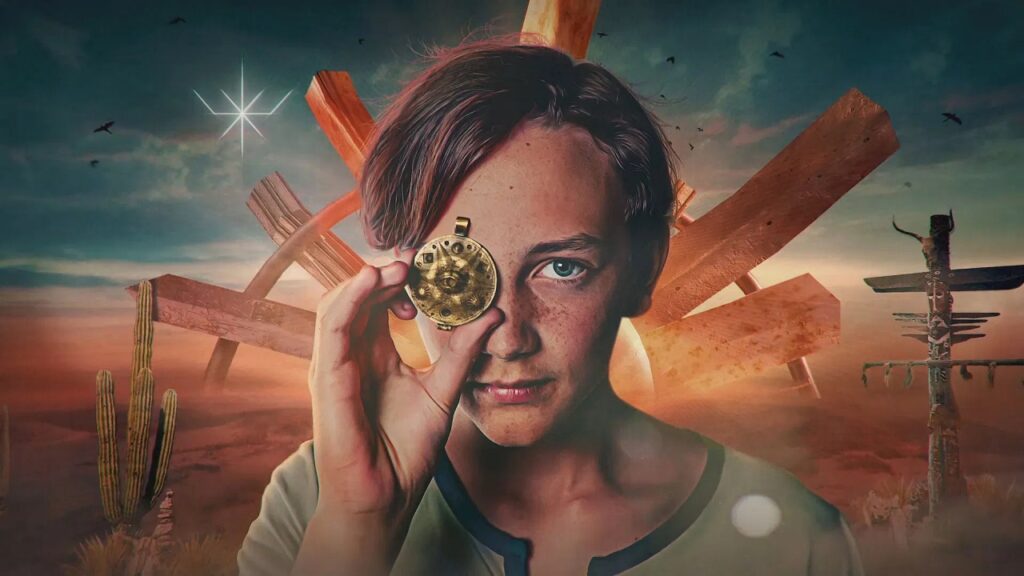
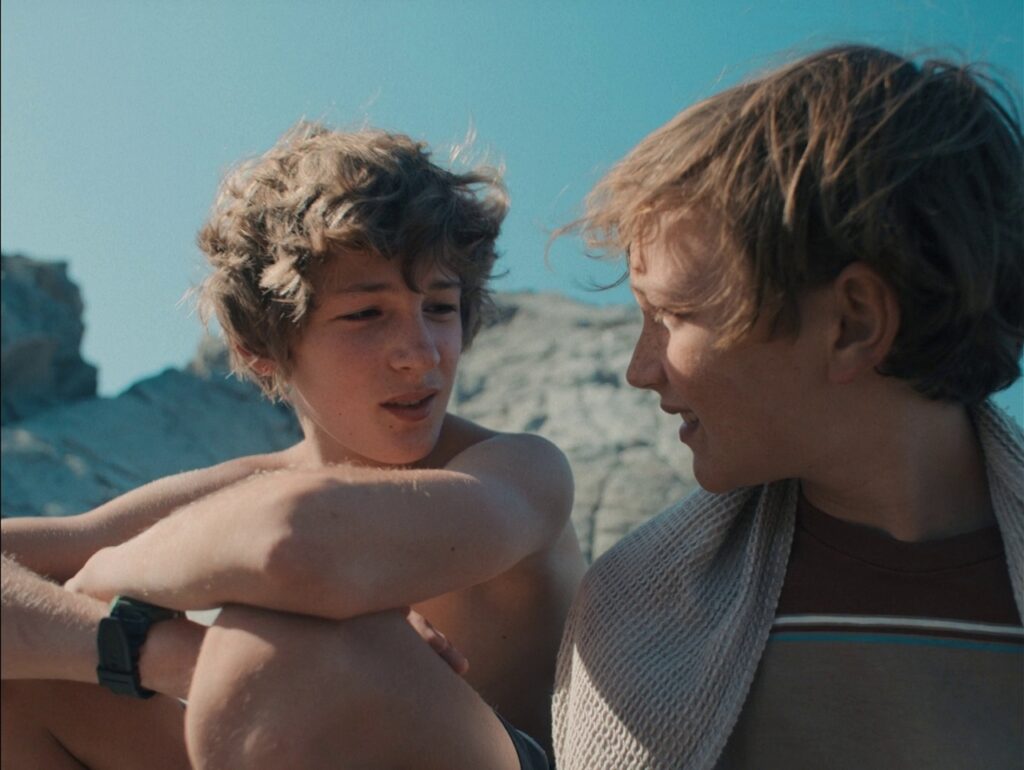
Netflix’s The Chosen One (“El elegido”) is more than just another graphic novel screen adaptation. This 2023 six-episode series, starring Bobby Luhnow, is a stunning, sun-drenched journey that skillfully blends adolescent friendship drama with profound theological questions, carving out its originality in the dusty, mystical landscape of Baja California, Mexico. It’s a visually stunning, emotionally resonant experience that deserves a spot on your watchlist. More to the point with regard to this blog, The Chosen One is one of the rare modern portrayals of a Boy-God myth.
The series follows 12-year-old Jodie (Bobby Luhnow), a quiet boy living in the small town of Santa Rosalía in the late 1990s. After surviving a horrific truck accident completely unscathed, Jodie begins to manifest miraculous abilities: turning water into wine, healing the sick, and even raising the dead. Alongside his tight-knit group of friends, Jodie must navigate his newfound fame, the skepticism of the town’s religious leaders, and the weight of a destiny he never asked for. As evangelical preachers and Catholic priests vie for his allegiance, the town is gripped by a religious fervor. Meanwhile, a mysterious stranger arrives with questions about Jodie’s past that hint at a truth far more complex than anyone imagined. Jodie is thrust into the role of a modern-day Messiah, but beneath the biblical wonders lies a darker secret about his origin and destiny.
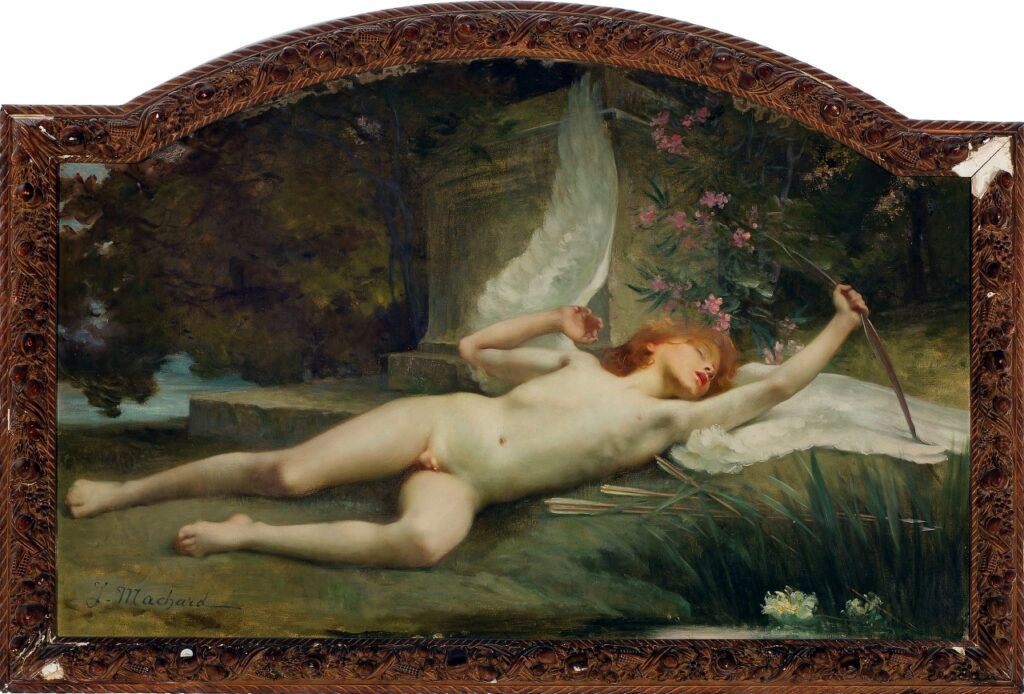
When the uncorrupted desire of the gods penetrates matter, it becomes ensnared in time and space with only one hope of ever escaping. That hope rests with the human soul. Allegorically, this is Eros having his wings clipped by Chronos—the first threshold of Desire, where the eternal is bound by the temporal.
II. The Rising to the Heart
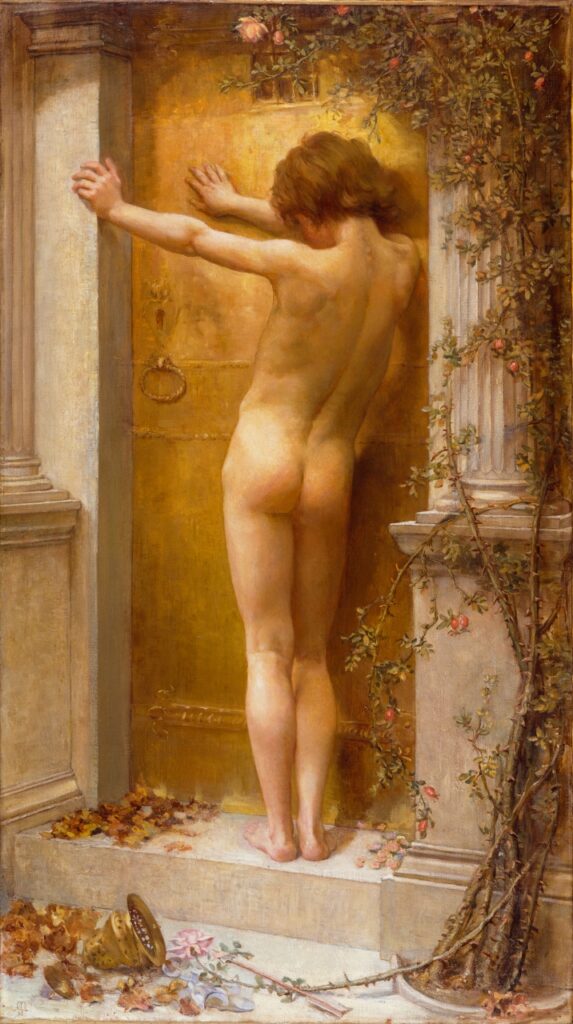
Anna Lea Merritt, “Love locked out,” 1890
The youthful god can no longer soar; he must find Psyche, the soul, to regain his freedom with her. On its path, Desire penetrates through the feet, stirs in the loins, and refines through the solar plexus to reach the heart, because the human heart beats at equal distance between thought and sex drive. Eros now stands at the door of the bridal chamber. This is the second threshold of Desire. Its allegory is “Love locked out.”
Have you ever looked at something breathtakingly beautiful and felt a quiet longing in your soul? A sense that there is something more behind that fleeting spark of awe?
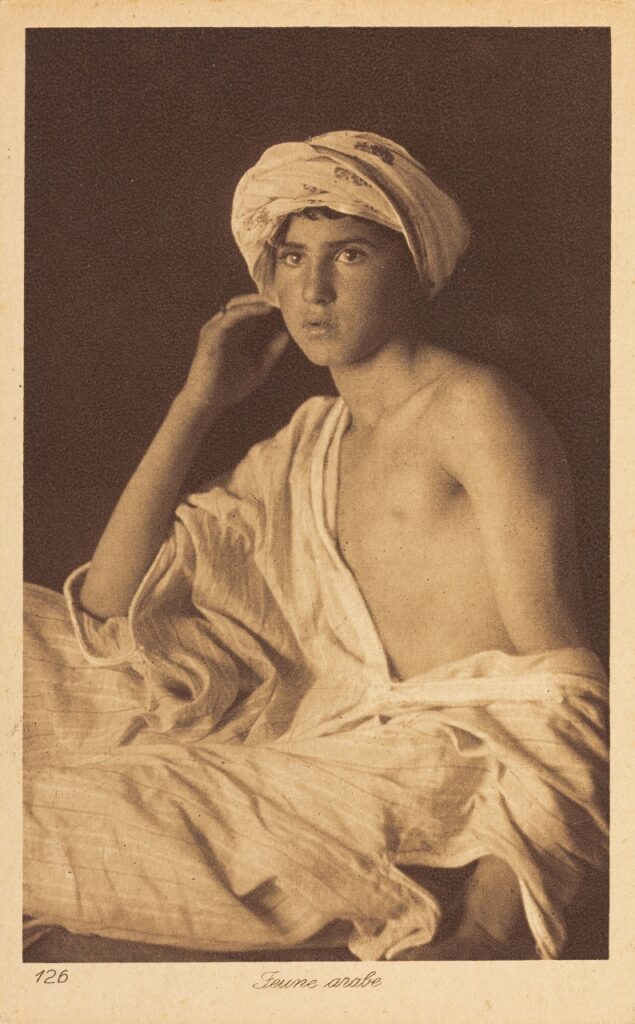
For centuries, many Sufis, the mystics of Islam, found that spark not just in nature, but in human beauty itself. This wasn’t some base attraction. It was rooted in a profound, and often controversial, practice known as nazar ila’l-murd (gazing at the beardless youth). For these seekers, a particularly beautiful male youth who hadn’t yet grown facial hair wasn’t just an object of desire; he was a witness to Divine Beauty.
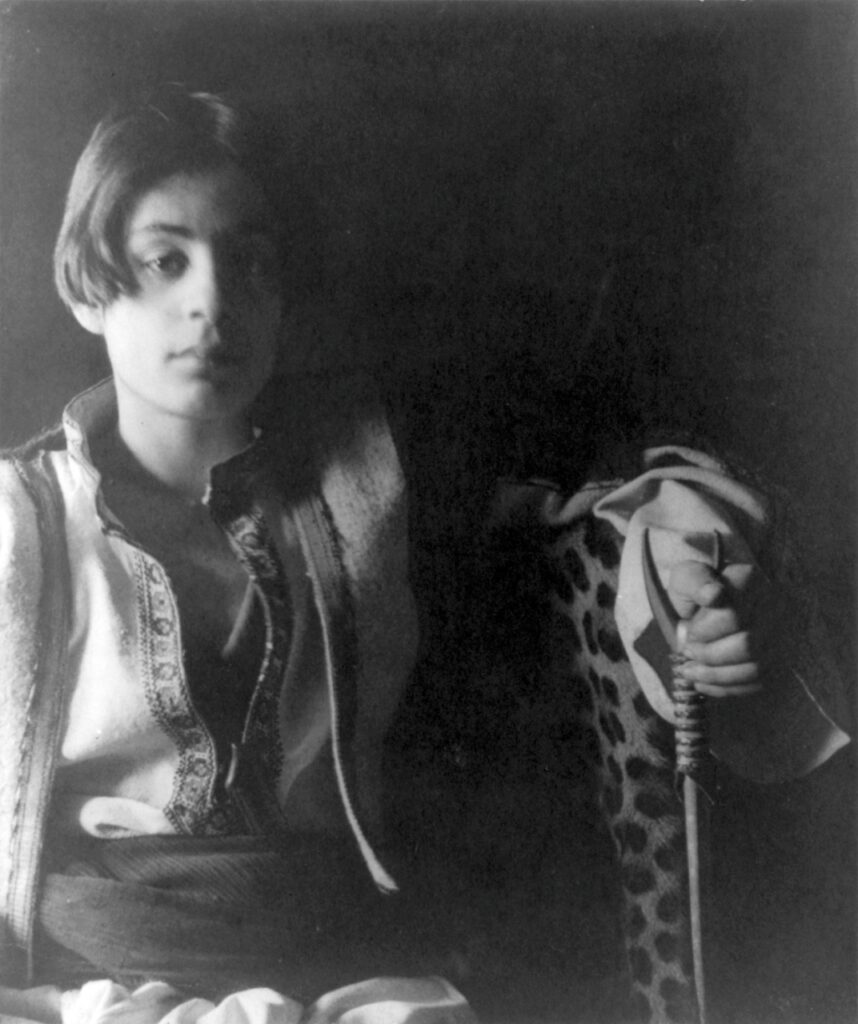
Lehnert et Landrock: le Caire, Jeune homme à la djellabah, Tunis circa 1904
The idea wa deeply influenced by Neoplatonic philosophy: all earthly beauty is a reflection, a faint glimmer, of the absolute, incomparable Beauty of God. By contemplating this reflection with a pure heart and disciplined mind, the mystic wasn’t worshipping the physical form but using it as a mirror, a stepping stone. The Sufi gazes not to possess, but to witness. The act of “gazing” was meant to be a moment of profound spiritual connection, bypassing the intellect and experiencing a direct, emotional “tasting” of the Divine.
Peter Lamborn Wilson called the practice a kind of “imaginal yoga,” an aesthetic and spiritual exercise that used the energy of longing to fuel a flight toward the divine. The practitioner would look at a beardless youth to feel “passionate love” and move through that physical attraction, letting his longing become so intense that it burned away the physical and left only the spiritual.
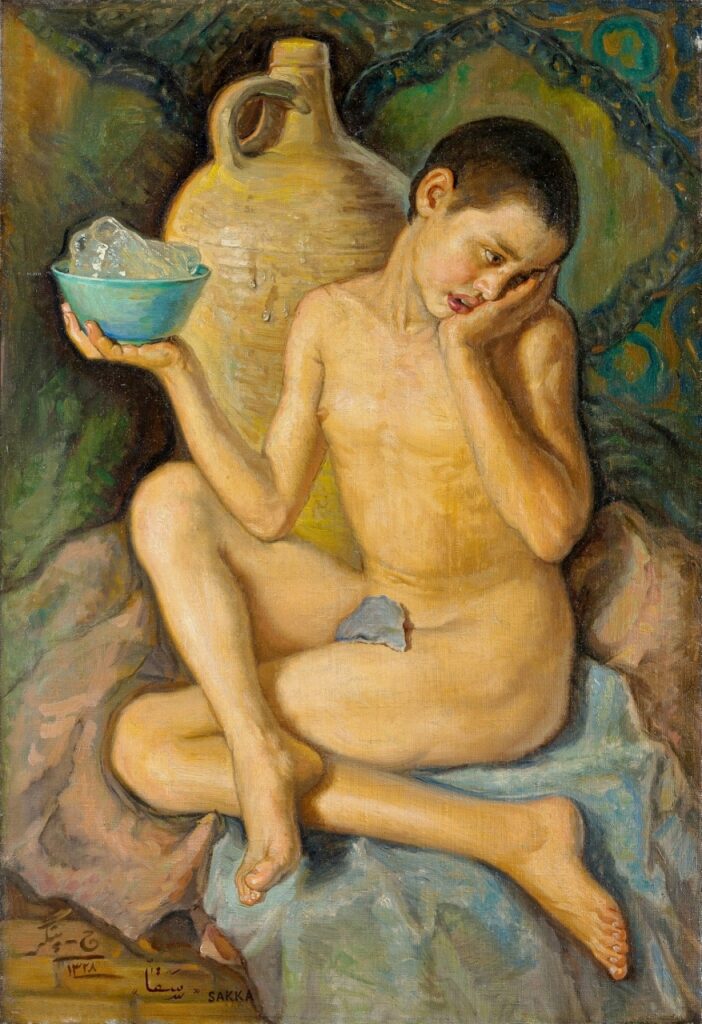
“Puberty” by Jafar Petgar, Oil Painting, 1949
The nazar ila’l-murd had an enormous influence on the ghazal, the lyric poem that dominated Persian and Arabic literature. Before this tradition became formalized, Arabic poetry had a strong tradition of celebrating female beauty. But in the Persianate world (especially from the 10th century onward) the literary beloved became predominantly a male youth—the object of desire in the physical world, who represented the soul’s desire for union with God.
Kahlil Gibran (1883-1931) Lebanese born American poet and novelist, photographed by Day, F. Holland, circa 1898
By the time the ghazal reached its peak, the practice of nazar was largely symbolic. You don’t have to actually go out and stare at youths to write the poetry; you just have to understand the metaphor. But it does highlight something fascinating about pre-modern societies: the relationship between sexuality, spirituality, and aesthetics was often viewed through a completely different lens than ours. There was no “gay” or “straight” identity in the way we understand it. Instead, there was a cultural appreciation for the beauty of male youth (the beardless) that existed alongside heterosexual norms
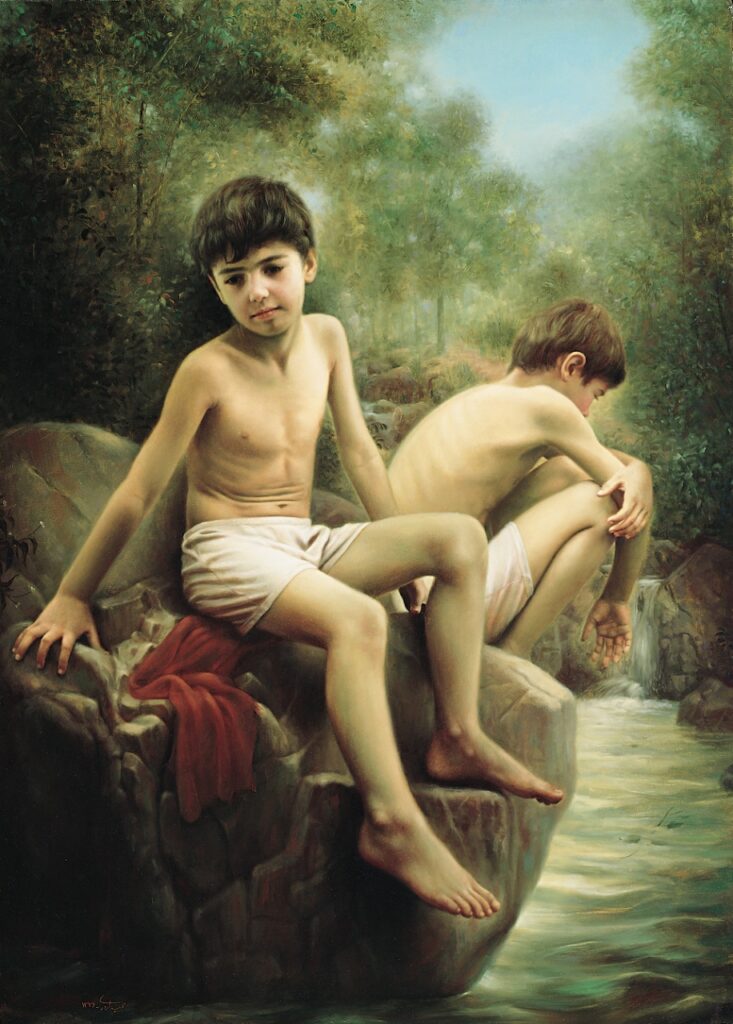
“Swimming” by Majid Arvari, 1997
The unmarred youth’s beauty is a metaphor for purity, ephemerality (if you love a beautiful face, but that face is mortal and will eventually wrinkle or grow a beard, then the true beauty must be the divine source behind it), and the soul’s yearning for perfection. You don’t need to practice nazar ila’l‑murd to appreciate what it tried to articulate: that an awareness of and apreciation for the beauty of male youth can be a mystical path; and that desire can be refined rather than repressed. That is the path of union with the divine in the form of a radiant boy.
Though “desire” and “longing” are often used interchangeably in the English language, for the purpose of this blog, I would like to make a distinction.
“Desire” was borrowed from the Old French desirier (from the Latin desiderare) following the Norman Conquest.
“Longing” originates from the Old English langung or langian (verbal noun), which derived from the Proto-Germanic verb *langōną—the act of “stretching out towards” something distant, rooted in the same sense as “long.”
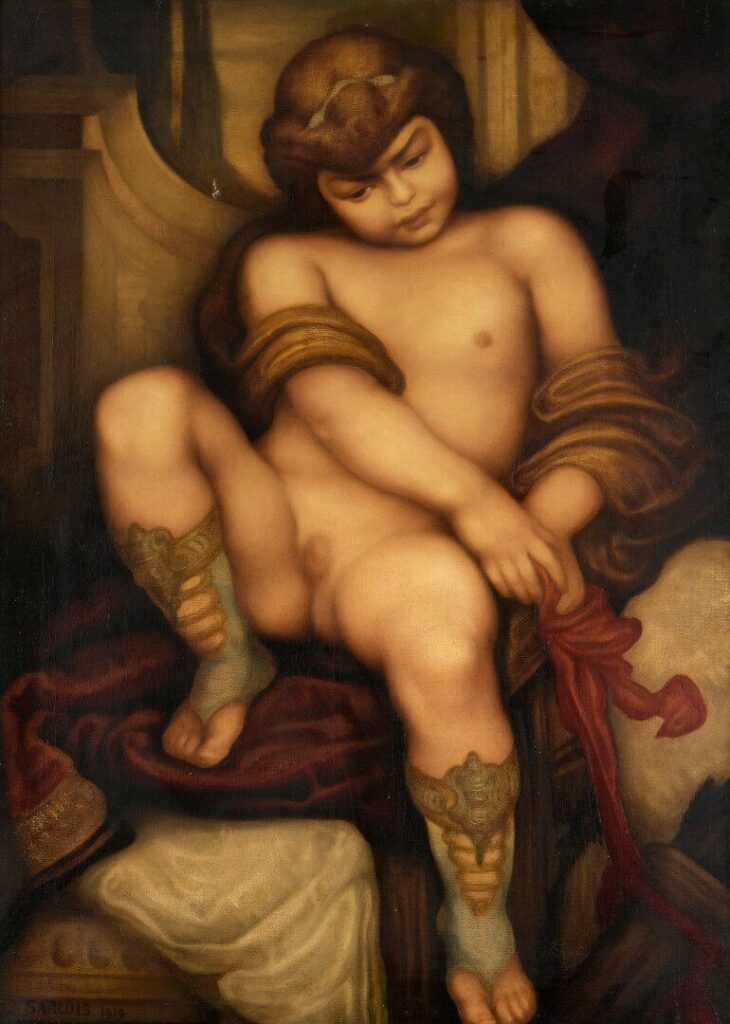
“Le Désir qui s’échappe ou Le Rêveur” by Léonard Sarluis, 1919.
To me, then, desire in its purest form is a divine prerogative. Desire as embodied in the youthful, Orphic Protogenos is the seed of life, the originator of beauty, the catalyst of creation. Above all, it is the mechanism by which the gods are self-sustained (more on this in my book)
Because our nature is in part divine, we are prone to desire as well. Yet desire in us is corrupted. One look at the human condition is enough to demonstrate that our desires inevitably degenerate into greed, possessiveness, jealousy, erratic behaviors, hate, war, and destruction.
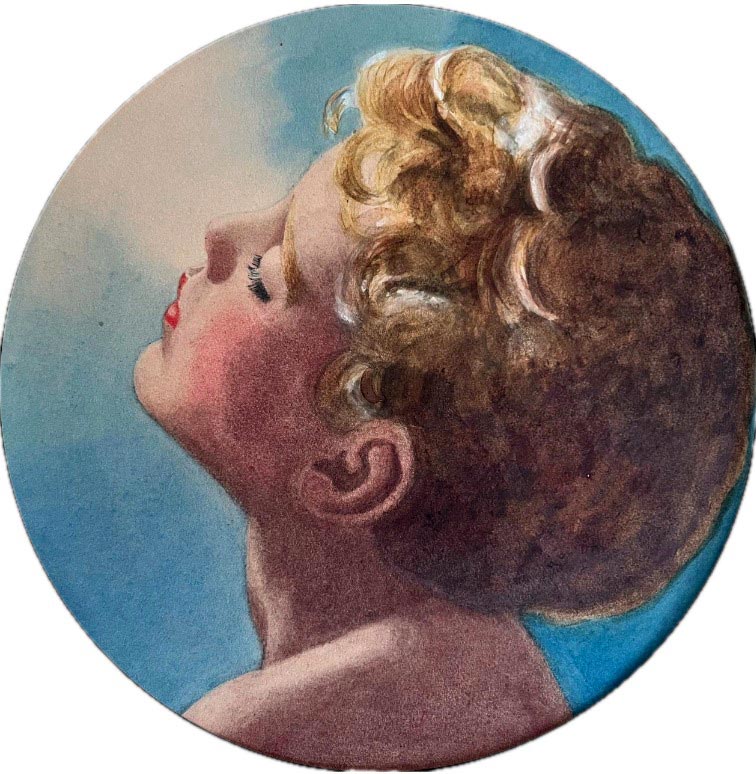
Pre-Raphaelite Victorian School head study of a golden haired boy
Longing, on the other hand, is suitably human because our longings ultimately draw us closer to the divine.
In the dynamics between soul and spirit, the lover’s “stretching out towards” the divine Other, and the desire of the Beloved to unite with the soul bring about the merging of the twins—the hieros gamos, or transcendent union.
“Cupid Kindling the Torch of Hymen” by George Rennie, 1831