Moon Child (El niño de la luna) — 1989: A Boy God Lost in a Human World

Moonchild

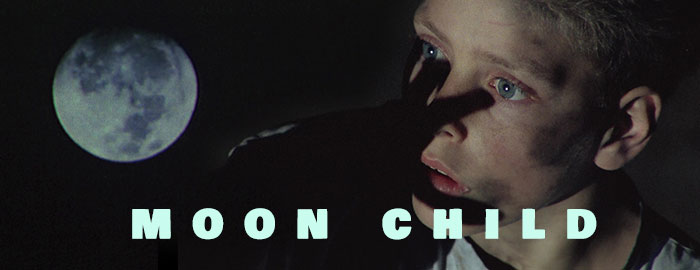
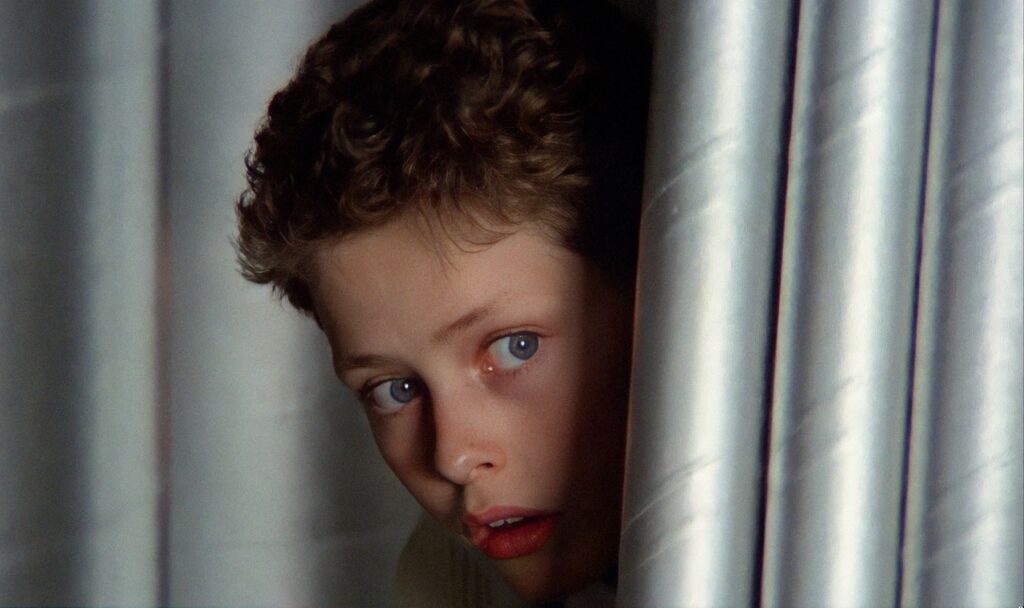
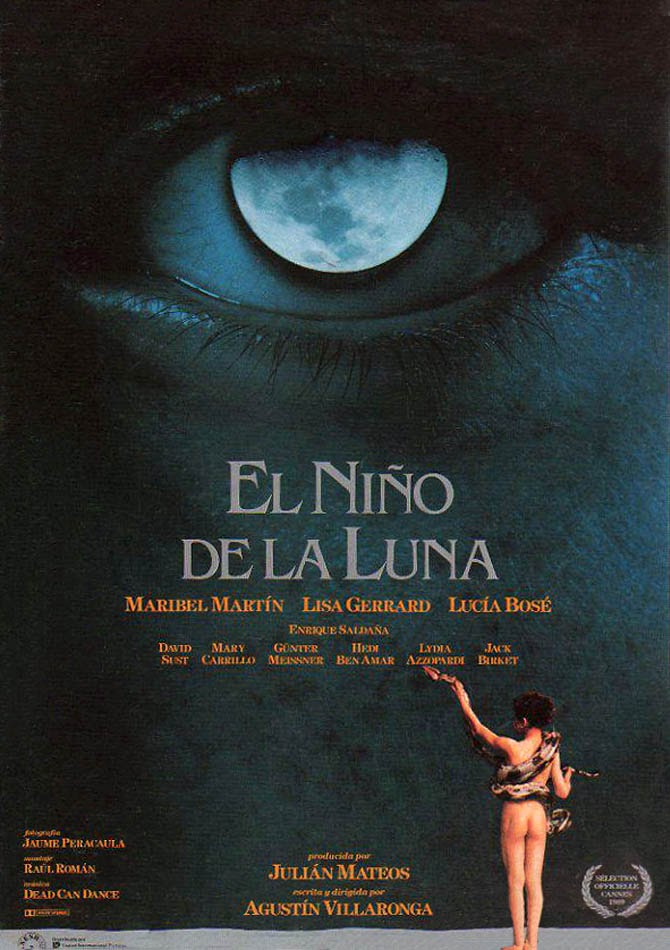
Agustí Villaronga’s El niño de la luna presents a group of orphans entangled in a secret project called “Moonchild,” which aims to summon a divine being through esoteric means. David (Enrique Saldaña), a young orphan with telekinetic powers, is adopted from an institution and brought to a research facility—a “treacherous semi-scientific cult”  where children with extraordinary mental abilities are studied. The organization’s goal? To engineer the birth of a supernatural being: the “Child of the Moon,” a figure prophesied by an African tribe who await a white boy who will become their god

Moon child Enrique Saldaña

The organization that captures the children is never explicitly named, and this ambiguity is essential. They represent something more universal than any specific secret society: they are the machinery of the world that seeks to instrumentalize the sacred. Their methods are clinical—genetic selection, controlled environments, systematic observation. They want to produce the Moon Child through “breeding a superior being” 

The Boy God, however, does not belong to the sun-drenched world of men; he belongs to the reflected light of the celestial. The moon is not merely a celestial body here; it is a governing presence. Scenes bathed in lunar light feel suspended outside time, as though the child’s destiny is being inscribed upon him by the moon rays themselves. He is pulled into being by lunar gravity, as though the cosmos itself requires him.

Moon child poster

There are films that tell stories, and there are films that feel like they were dreamt before they were written. El niño de la luna belongs firmly to the latter category—a work suspended between myth and memory, where narrative logic yields to ritual logic, and where the child at the center is less a character than a metaphysical disturbance. It is not a superhero origin story; it is a dark, ritualistic exploration of occult philosophy and the heavy burden of divinity.

Villaronga draws from different traditions of the Boy-God archetype, but he refuses to anchor the child in any single one. The result is a figure who feels universal and unsettling—a child who is both miracle and omen. The film’s metaphysical meaning is not delivered through exposition but through atmosphere. The metaphors are purposely unclear; the imagery does not explains, it awakens.

What makes El niño de la luna enduring is its refusal to resolve its mysteries. The film offers no neat theological system, no clear moral. Instead, he gives us a mythic space in which to contemplate power, innocence, and the human hunger for transcendence. It suggest that the divine is not a comfort but a rupture. The Boy God is not a classic savior figure; he is a question—one that destabilizes every character who encounters him.

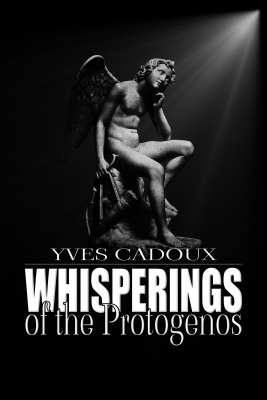
Thank you for visiting my website. I you want to learn more about the mysteriosophy of the Boy God, or if you’d like to support this blog, you can purchase my book.

Posted in The Screen | Tagged , , | Leave a comment

Adonis

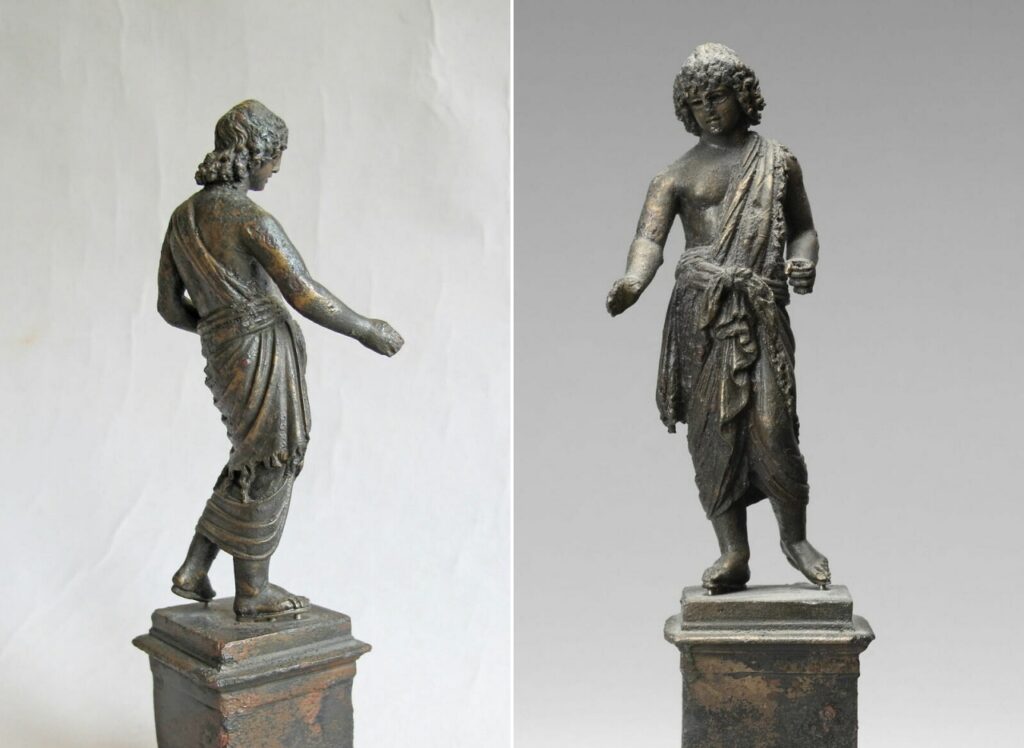
Bronze statuette of Adonis 100 50 CE (3) 8 side
Bronze statuette of Adonis 100-50 CE

Before, the petty, jealous, and sadistic mountain jinni Yahweh appropriated the title “Adonai” in a bid to lord over our sphere, the handsome, ever-young Boy God Adonis was worshiped by the Phoenicians, and in the unspoken mysteries of the Greek women. A myth telling us how a wild boar killed the graceful ephebe becomes an allegory for our time: the boorish one-God has supplanted and murdered the classical Boy Gods of passion and ecstasy. We created a lawgiver to justify the abuses of society; we pray a Heavenly Father to bless our wars and our armies, to grant victory to a politician or a sport team; we have conjured a Rex Mundi who revels in our hysteria and oversees our slow, steady, descent into the crushing gears of a materialistic system.

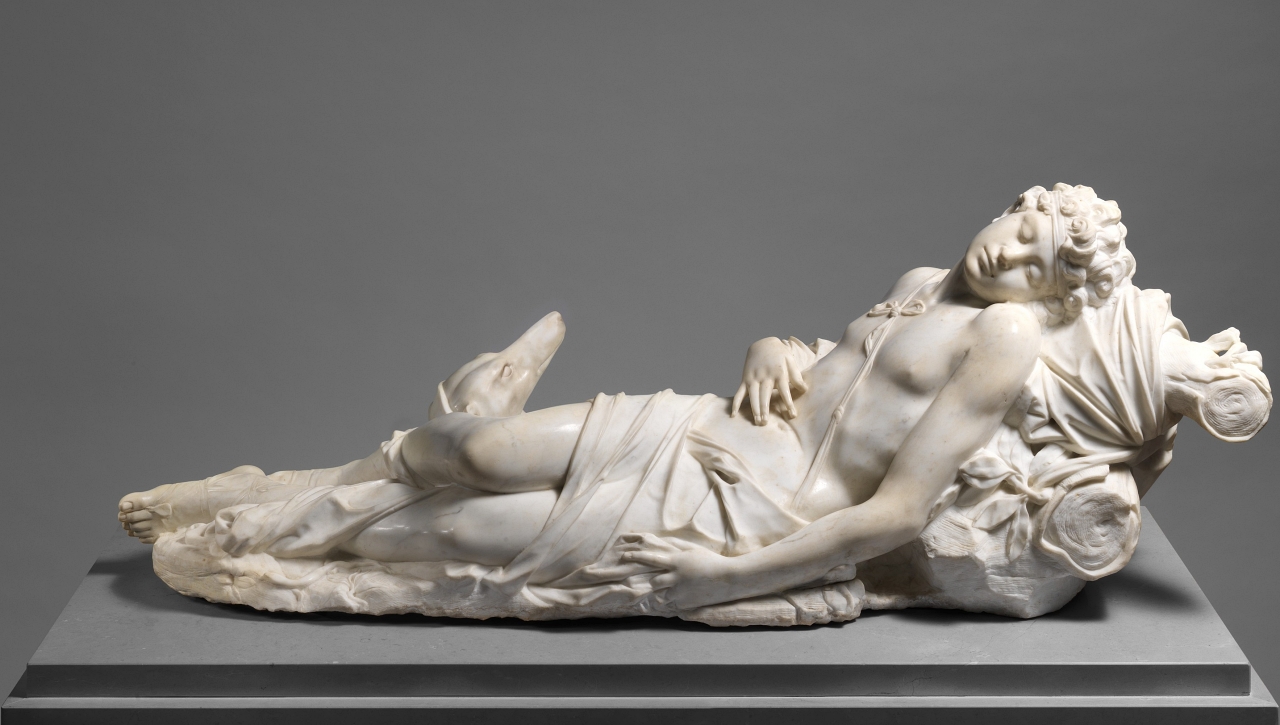
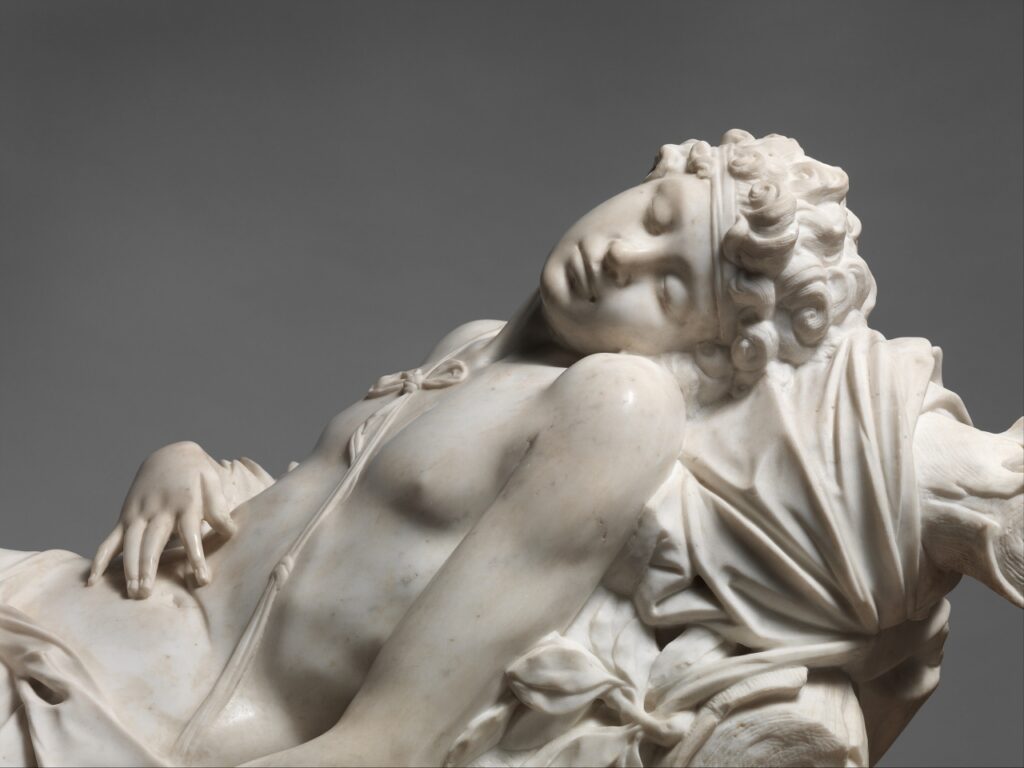
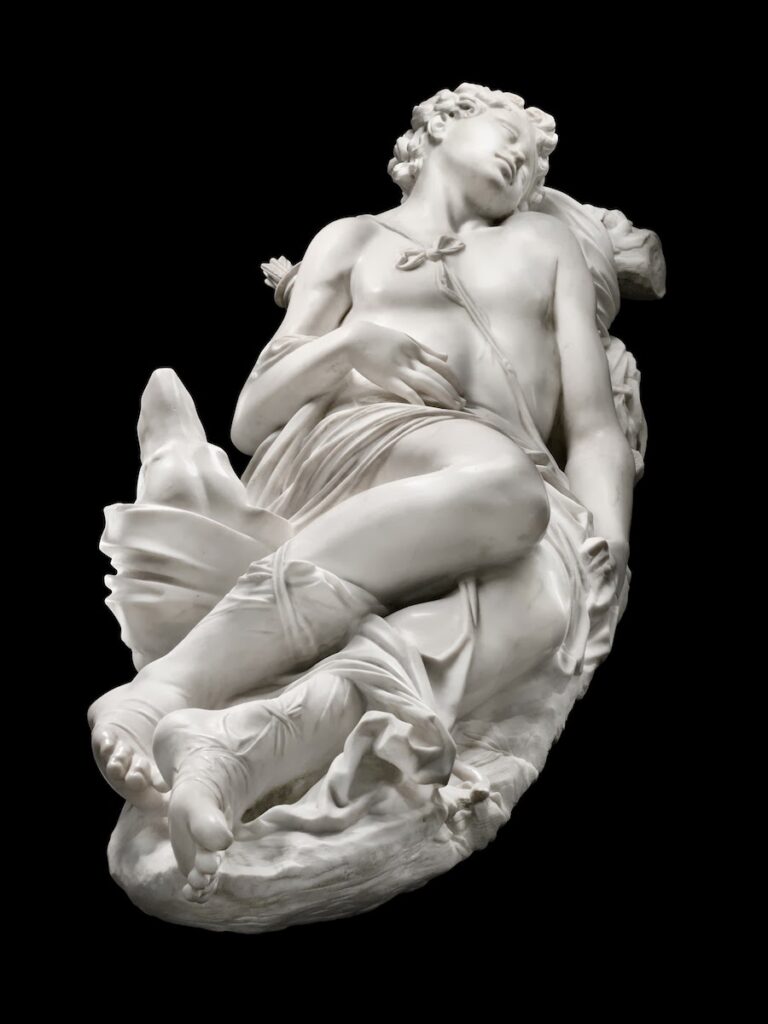
Antonio Corradini, Adonis, 1725 (3) wp
Antonio Corradini, Adonis, 1725

The myth of Adonis originates in the ancient Near East—especially the Levant and Mesopotamia—and was later adopted and reshaped by the Greeks. What remains constant across these transformations is Adonis’s essential nature: beauty as a force in itself, youth as a sacred state, desire as something that transcends categories and hierarchies. Gods desire him, goddesses war over him, mortals mourn him, and through it all, he remains the passive center, the beautiful object that moves others to action.

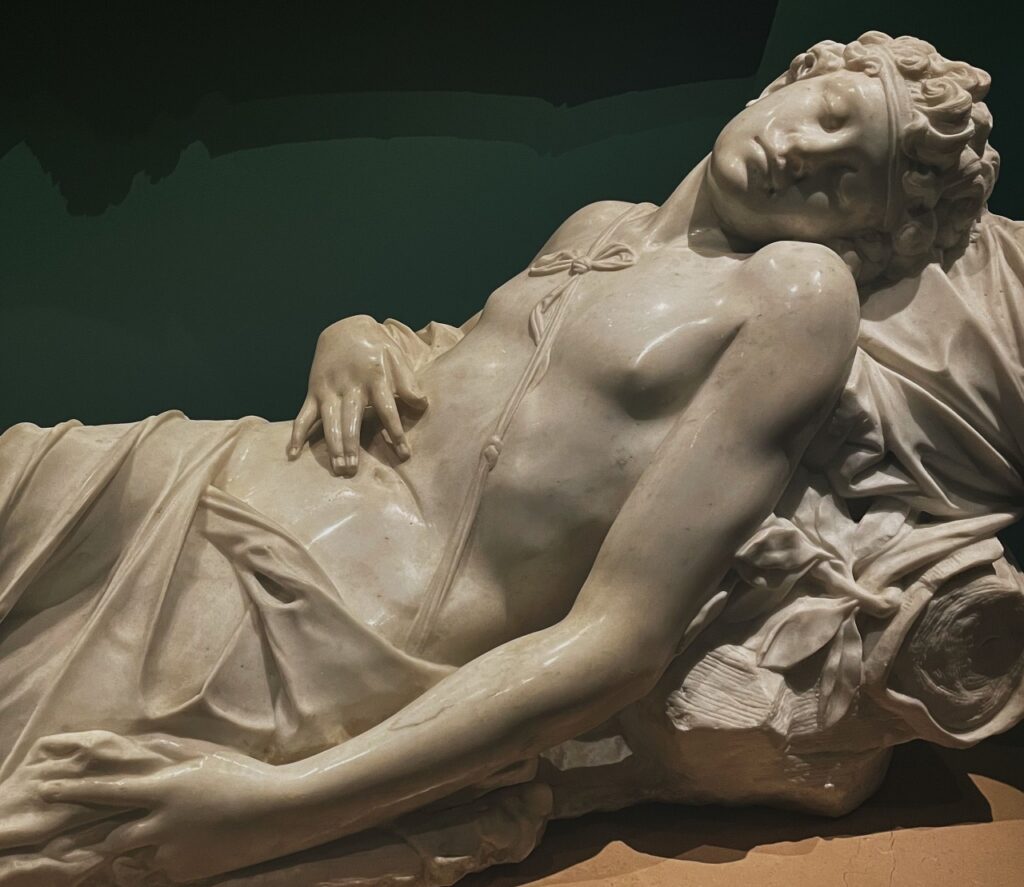
Antonio Corradini, Adonis, 1725 (1) wp

Adonis, however, represents something more specific than mere beauty—he embodies the concept of the kouros, the eternal youth suspended at the threshold of manhood. Unlike gods like Zeus or Poseidon who wield mature masculine power, or even Apollo who represents idealized young adulthood, Adonis exists in perpetual adolescence.

Antonio Corradini, Adonis, 1725 (2) wp

This isn’t incidental; it’s the very core of his divine nature. In a pantheon full of gods who do things (Zeus rules, Athena strategizes, Ares fights), Adonis simply is. And that being is enough to shake the cosmos. He is not a husband. He is not a father. He is the beloved. His entire identity is relational: he exists to be desired. Adonis is less a character than a principle: the principle that beauty and youth possess their own form of divinity, independent of power, wisdom, or action.

Antonio Corradini, Adonis, 1725 (4)

In a metaphysical sense, Adonis is the fleeting image of perfection that haunts all art and love. You glimpse him in a face, a sunset, a moment of joy, and then he’s gone. To love Adonis is to love what you cannot keep in material existence but can hope for in another world.

Thank you for visiting my website. I you want to learn more about the mysteriosophy of the Boy God, or if you’d like to support this blog, you can purchase my book.

Posted in Sculpture | Tagged , , | Leave a comment

Carl Larsson’s Amor Mercurius

Amor Mercurius by Carl Larsson

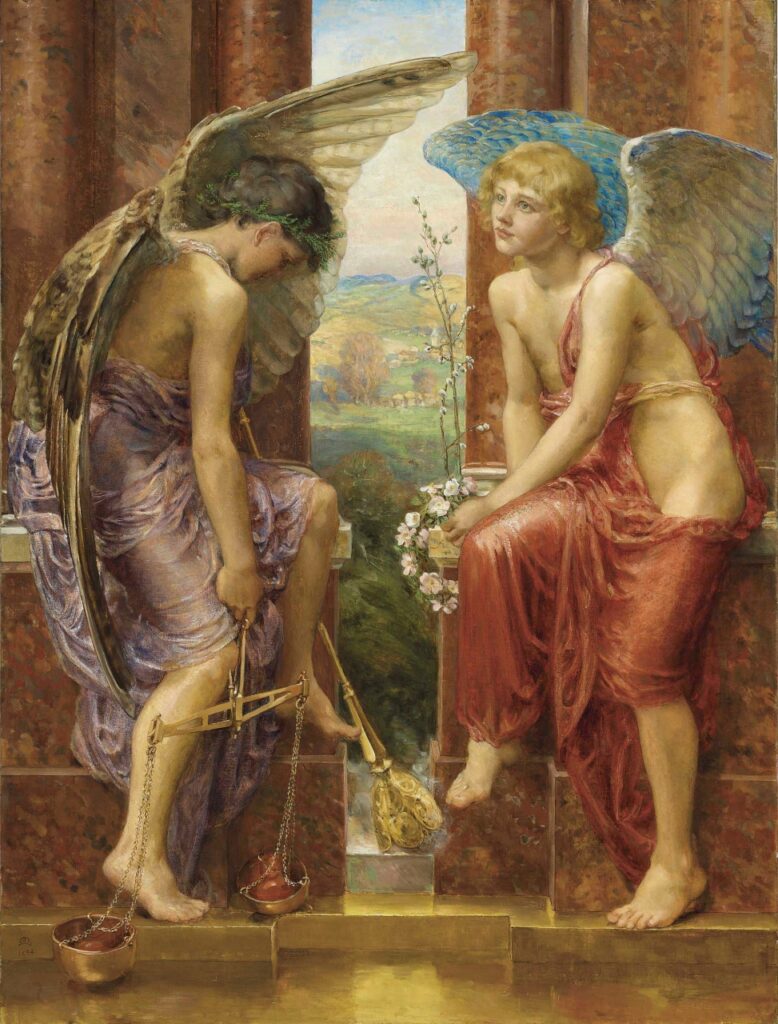
Swedish Painter Carl Olof Larsson (1853-1919) reimagined the little god Eros, assimilating him with Hermes (on the right).

Already, in Hellenistic and Renaissance art, there was a recurring motif of Eros borrowing the attributes of other gods to show that Love conquers all (Amor Vincit Omnia). It wasn’t unusual to find depictions of a “Cupid-Hermes” where a young Eros wears the petasos (winged hat) or the talaria (winged sandals) of Hermes. The two Boy Gods have, in fact, much in common.

In ancient Greek social life, Hermes and Eros were primary patrons of the Gymnasium and the Palaestra. Hermes presided over the athletic training and the cleverness of the youth. Eros presided over the bonds of friendship and the “ennobling” love between students and mentors.
Statues of both gods were frequently placed together in these spaces to suggest that physical education should be accompanied by both mental agility and the inspiration of beauty.

Both gods function as liminal figures—beings that cross boundaries. Hermes is the Psychopompos, moving between the worlds of the living and the dead. Eros is often described as a Daimon (a middle spirit) in Platonic philosophy. In the Symposium, Diotima describes Eros as a bridge between the mortal and the divine, much like Hermes’s role as the messenger of the gods. They both translate and interpret “human” needs to the “divine” realm.

Thank you for visiting my website. I you want to learn more about the mysteriosophy of the Boy God, or if you’d like to support this blog, you can purchase my book.

Posted in Art | Tagged , , | Leave a comment

The Chosen One (El elegido) — 2023: A Modern Myth of the Boy God

El elegido 2023 3god

Netflix’s The Chosen One (“El elegido”) is more than just another graphic novel screen adaptation. This 2023 six-episode series, starring Bobby Luhnow, is a stunning, sun-drenched journey that skillfully blends adolescent friendship drama with profound theological questions, carving out its originality in the dusty, mystical landscape of Baja California, Mexico. It’s a visually stunning, emotionally resonant experience that deserves a spot on your watchlist. More to the point with regard to this blog, The Chosen One is one of the rare modern portrayals of a Boy-God myth.

Bobby Luhnow, Alberto Perez Jacome Kenna 3god

The series follows 12-year-old Jodie (Bobby Luhnow), a quiet boy living in the small town of Santa Rosalía in the late 1990s. After surviving a horrific truck accident completely unscathed, Jodie begins to manifest miraculous abilities: turning water into wine, healing the sick, and even raising the dead. Alongside his tight-knit group of friends, Jodie must navigate his newfound fame, the skepticism of the town’s religious leaders, and the weight of a destiny he never asked for. As evangelical preachers and Catholic priests vie for his allegiance, the town is gripped by a religious fervor. Meanwhile, a mysterious stranger arrives with questions about Jodie’s past that hint at a truth far more complex than anyone imagined. Jodie is thrust into the role of a modern-day Messiah, but beneath the biblical wonders lies a darker secret about his origin and destiny.

Continue reading
Posted in Photography, The Screen | Tagged , , | Leave a comment

The Five Thresholds of Desire

I. The Descent into Matter

Jules Louis Machard, Le Rêve d'Eros (M)
GeoJules-Louis Machard, Le Rêve d’Eros

When the uncorrupted desire of the gods penetrates matter, it becomes ensnared in time and space with only one hope of ever escaping. That hope rests with the human soul. Allegorically, this is Eros having his wings clipped by Chronos—the first threshold of Desire, where the eternal is bound by the temporal.

II. The Rising to the Heart

Anna Lea Merritt, Love locked out,
Anna Lea Merritt, “Love locked out,” 1890

The youthful god can no longer soar; he must find Psyche, the soul, to regain his freedom with her.
On its path, Desire penetrates through the feet, stirs in the loins, and refines through the solar plexus to reach the heart, because the human heart beats at equal distance between thought and sex drive. Eros now stands at the door of the bridal chamber. This is the second threshold of Desire. Its allegory is “Love locked out.”

Continue reading
Posted in Art | Tagged , , , | Leave a comment