Before the Achaeans launched their tragic war on Troy, there lived a Trojan prince of such breathtaking beauty that he was said to be the most handsome of all mortals.

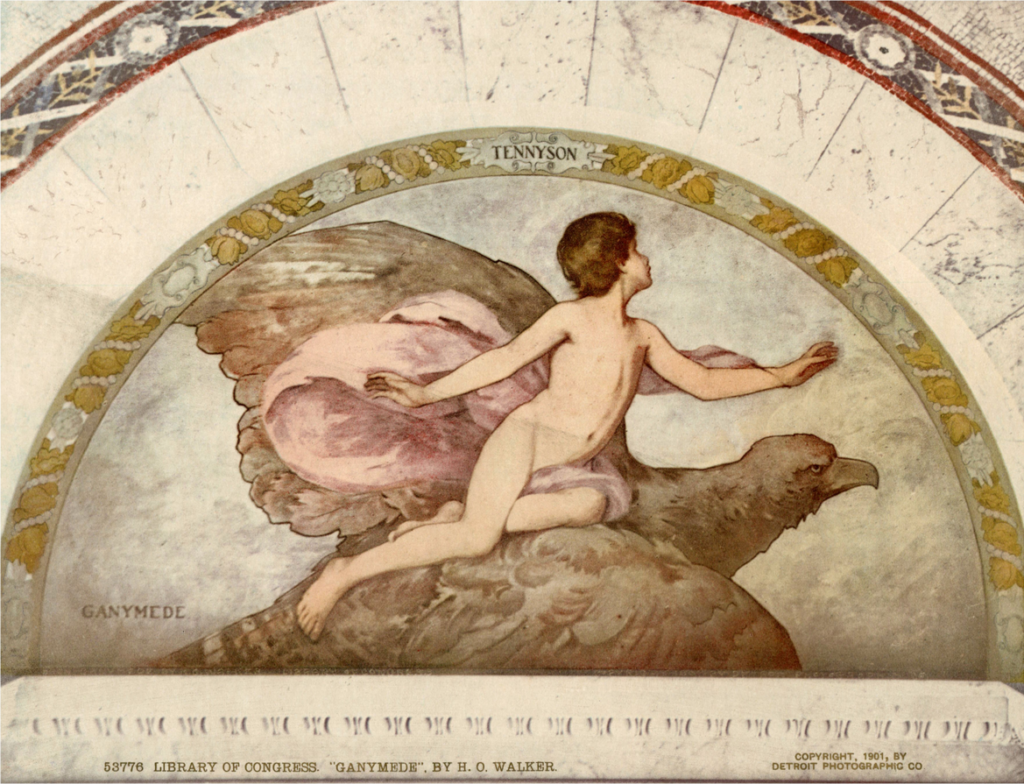
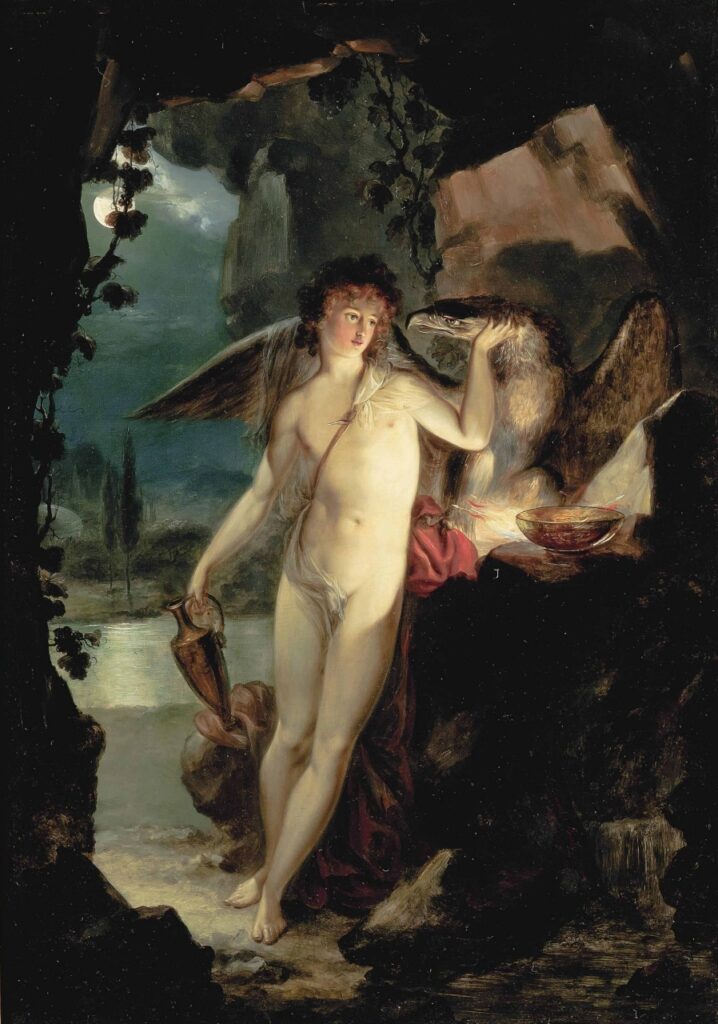
One day, while the radiant youth was tending his father’s flocks on the slopes of Mount Ida, Zeus, ever susceptible to beauty, saw the shepherd boy and was instantly enamored. Unable to contain his desire, the king of the gods disguised himself as a great eagle (or, in some versions, sent the eagle as his agent), swooped down from the heavens, and snatched the young prince, carrying him away to Mount Olympus.
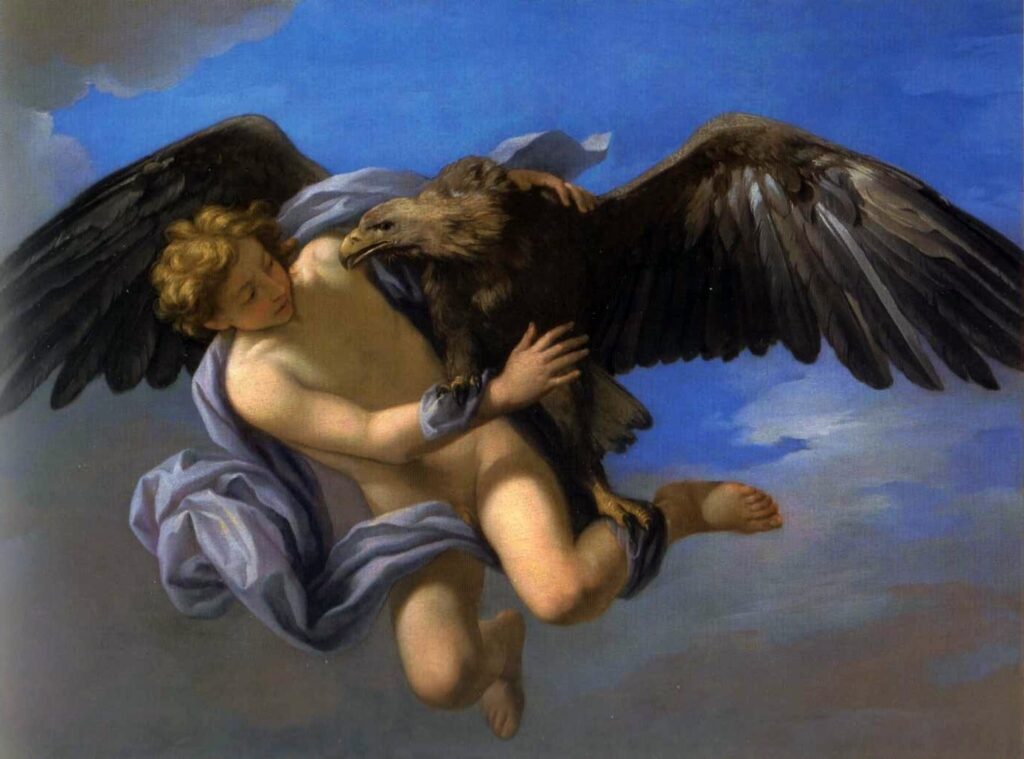
Ganymede’s family was left in despair. His father, King Tros, mourned his son as if he were dead. Zeus, however, was not without a sense of divine compensation. He sent Hermes, the messenger god, to comfort the king with a gift: a pair of immortal horses, the very same that carried the gods themselves, and a golden vine. Hermes assured Tros that his son was now immortal and lived among the gods.
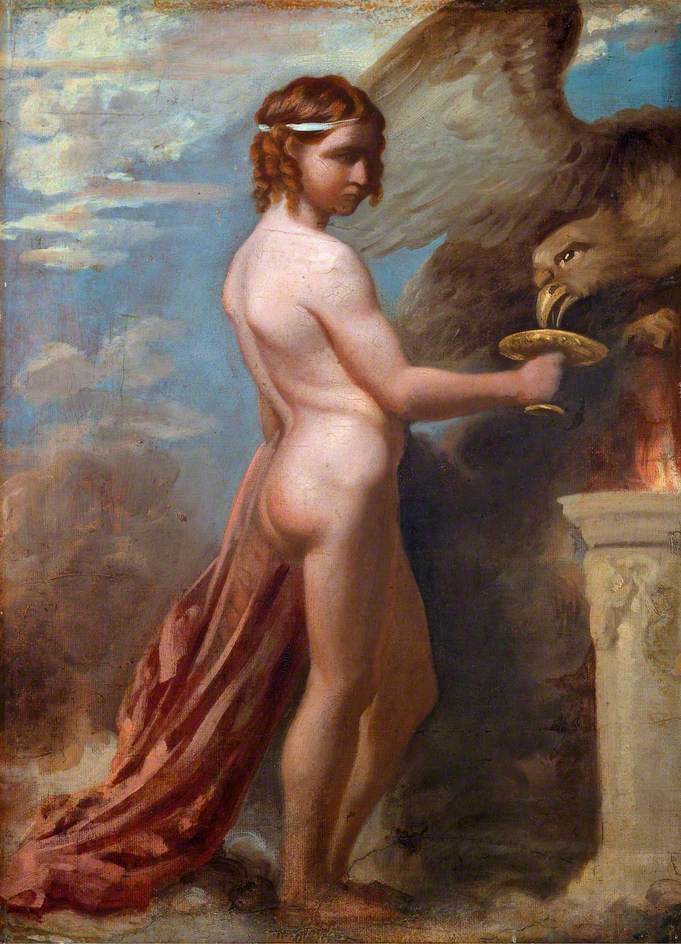
On Olympus, Ganymede took on a role of immense honor. He became an immortal, the cupbearer to the gods, and Zeus’s lover. In this position, he served the divine nectar and ambrosia at their celestial feasts, an eternal symbol of youth and beauty. As a final mark of his esteem, Zeus set the boy’s image among the stars as the constellation Aquarius, the water-bearer.
The Platonic Ideal: Beauty and the Soul
The philosopher Plato, in his dialogue Phaedrus, offers a metaphysical interpretation of the myth. He reimagines the story not as a physical abduction but as a metaphor for the soul’s ascent toward true beauty.
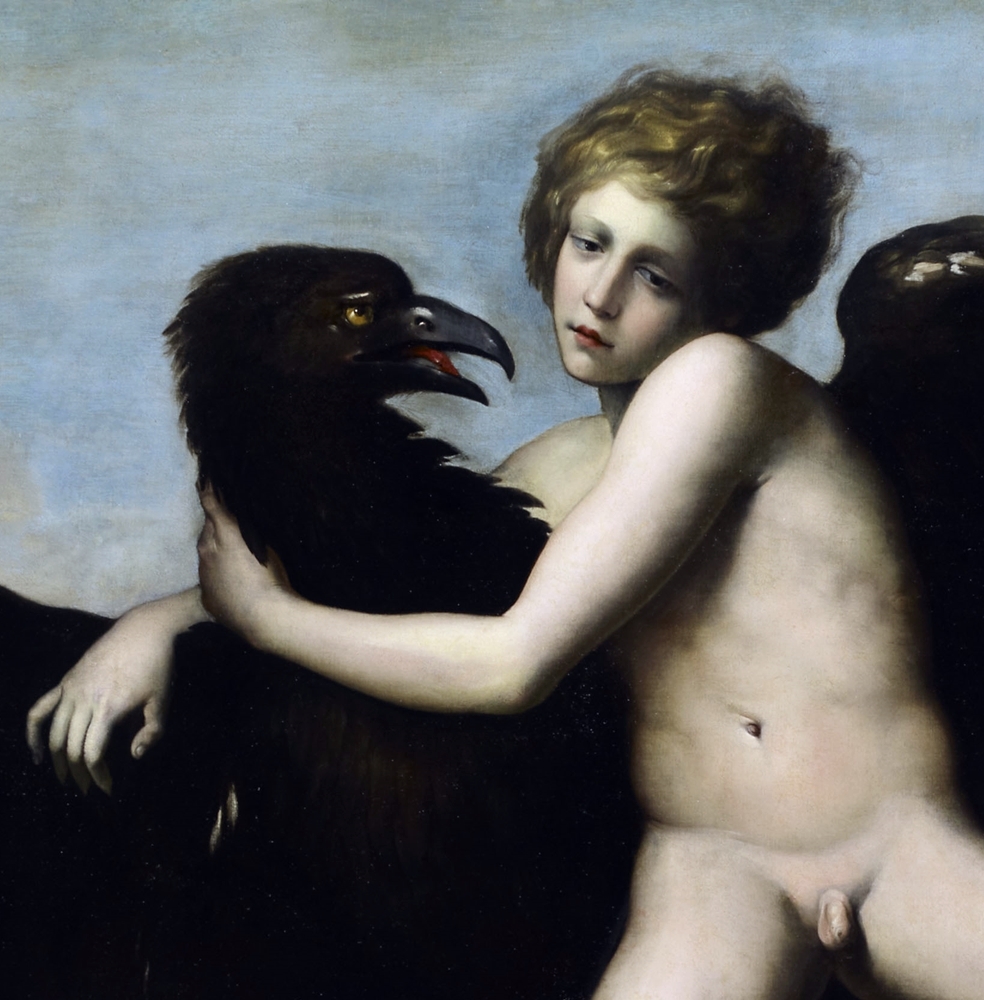
For Plato, the love (eros) inspired by a beautiful boy is the first step on a ladder of love. The sight of beauty on earth awakens the soul’s memory of true, divine Beauty, which it knew before birth. The lover’s desire is not merely for the boy’s body, but for the perfect Form of Beauty that he reflects. Zeus’s seizure of Ganymede becomes an allegory for the way divine inspiration seizes the philosopher-mystic, lifting him from the mundane world toward a higher, spiritual reality.