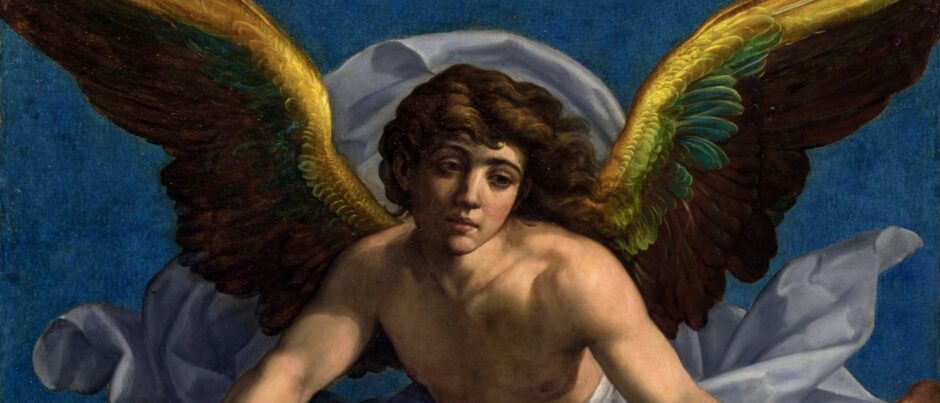
“Surely,” thought Yaldabaoth, “if I could flaunt the fanatical faith of just one man willing to make the most shocking sacrifice for my sake, the people would revere me with awe.” So, with a flair for grandstanding, he convinced an impressionable simpleton to sacrifice his first-born son in a way that would play well to the crowd. But when the time came and the devout lackey was about to plunge a knife into the youthful flesh of his heir, Eosphorus intervened and stayed the filicide’s hand to stop the horror. [source]
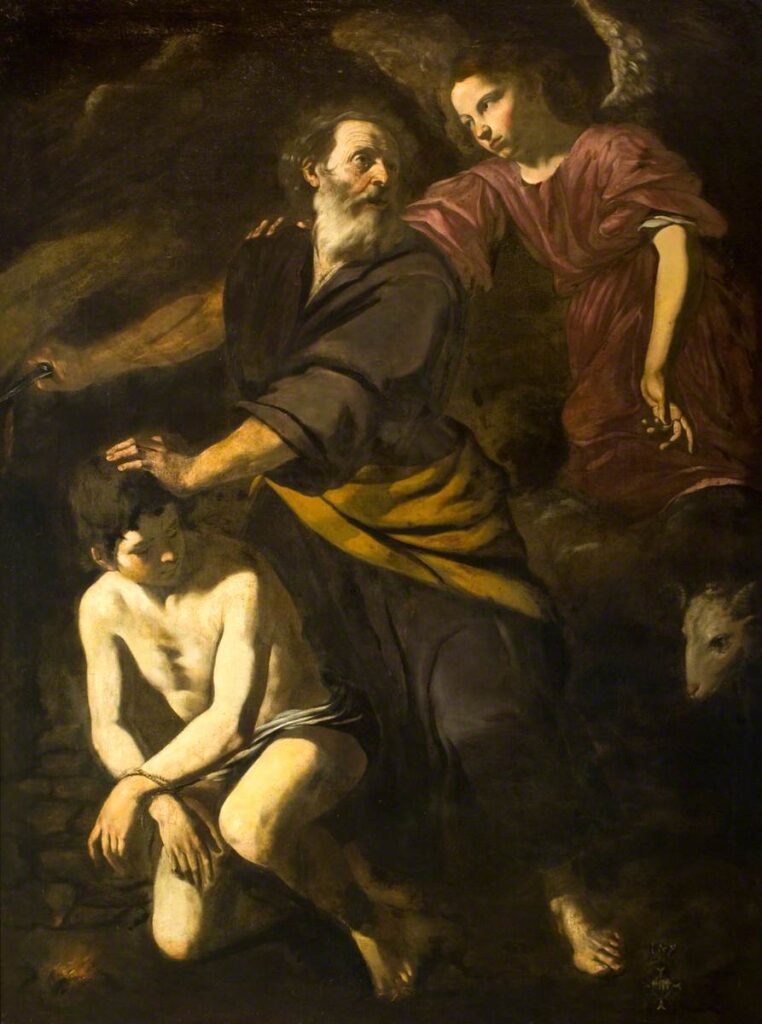
Abraham’s brutal attempt to sacifice his son stands, for reasons that remain unfathomable, as one of the most beloved episodes of Judeo-Christian mythology. It also became a major source of inspiration for Renaissance and Baroque artists. Yet when we look closely at most of those timeless masterpieces, we sense a story quite different from the one preached from pulpits.
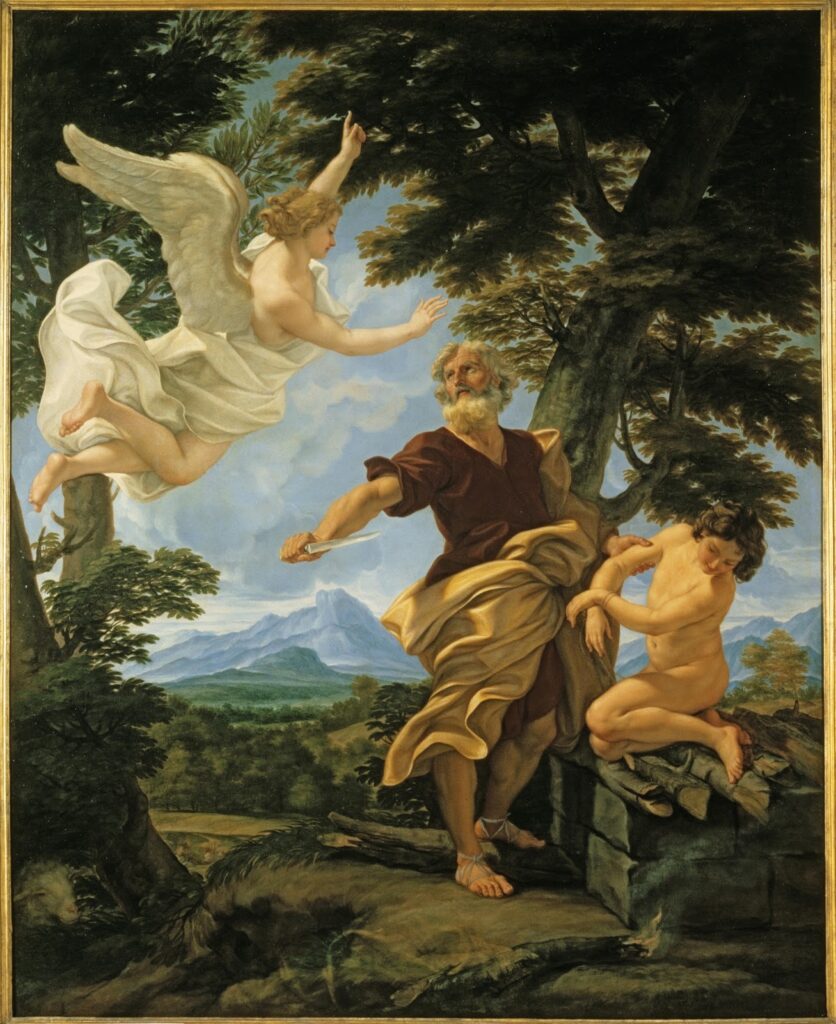
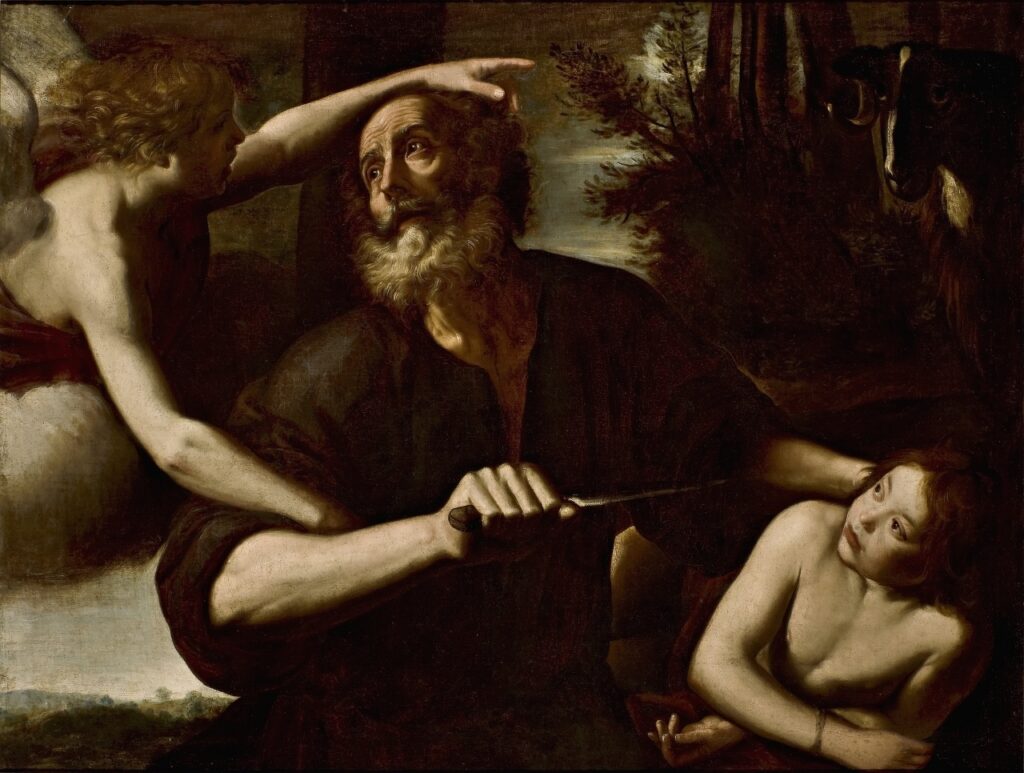
Baciccio
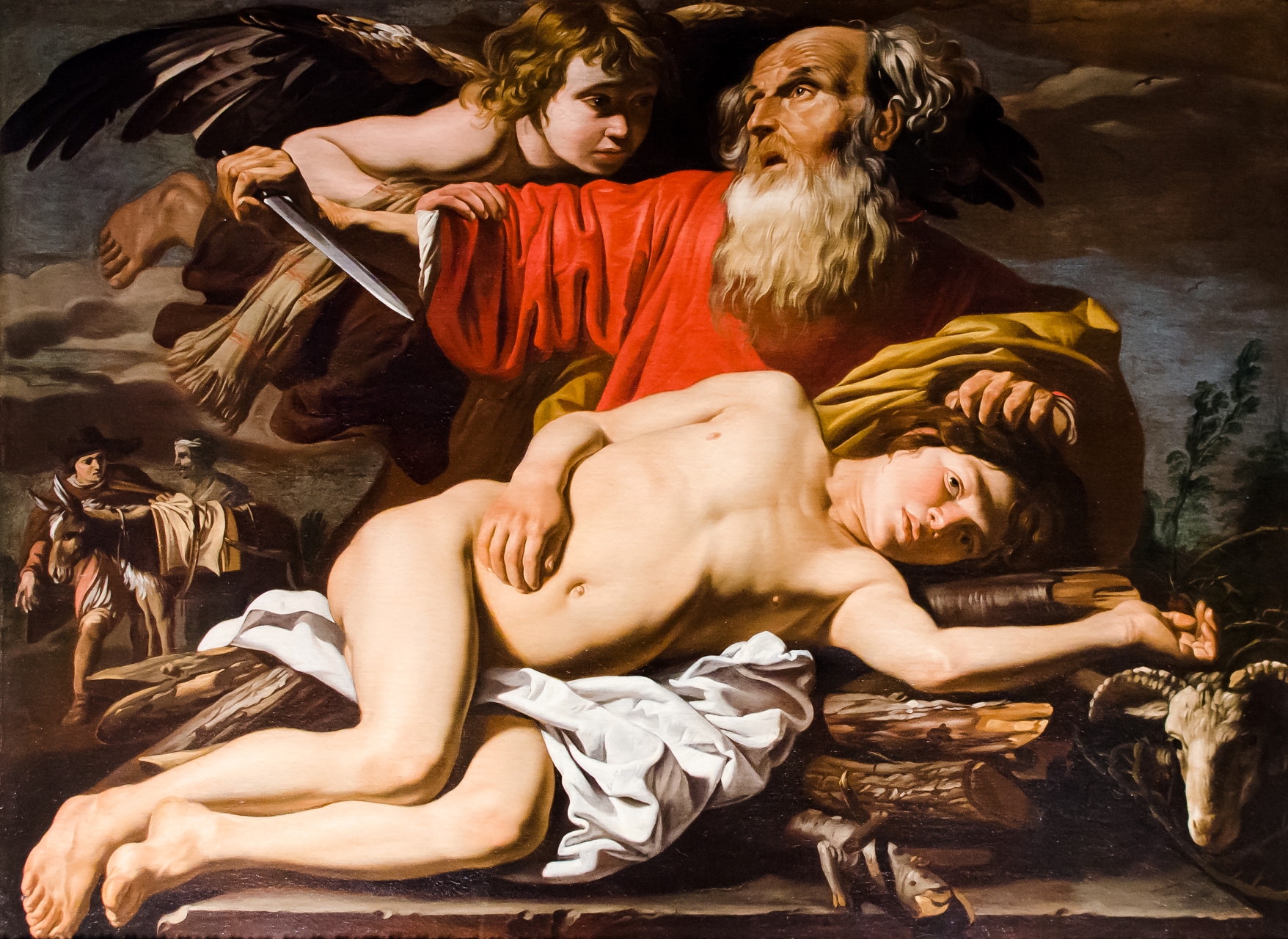
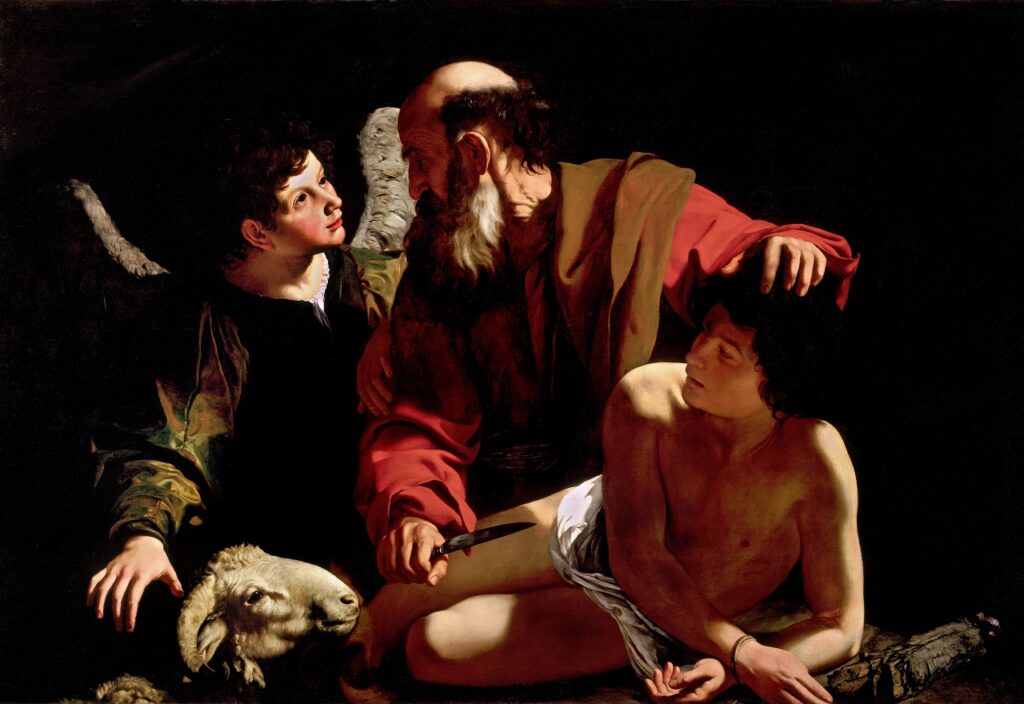
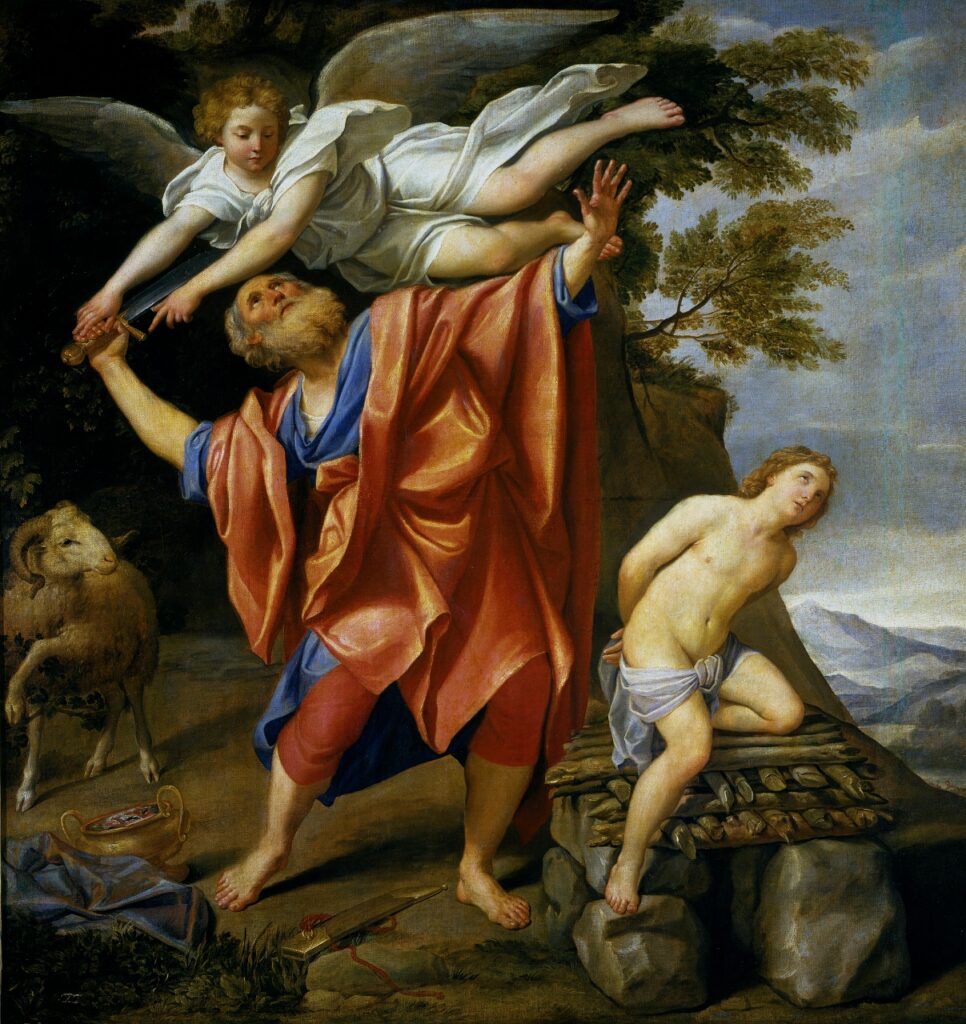
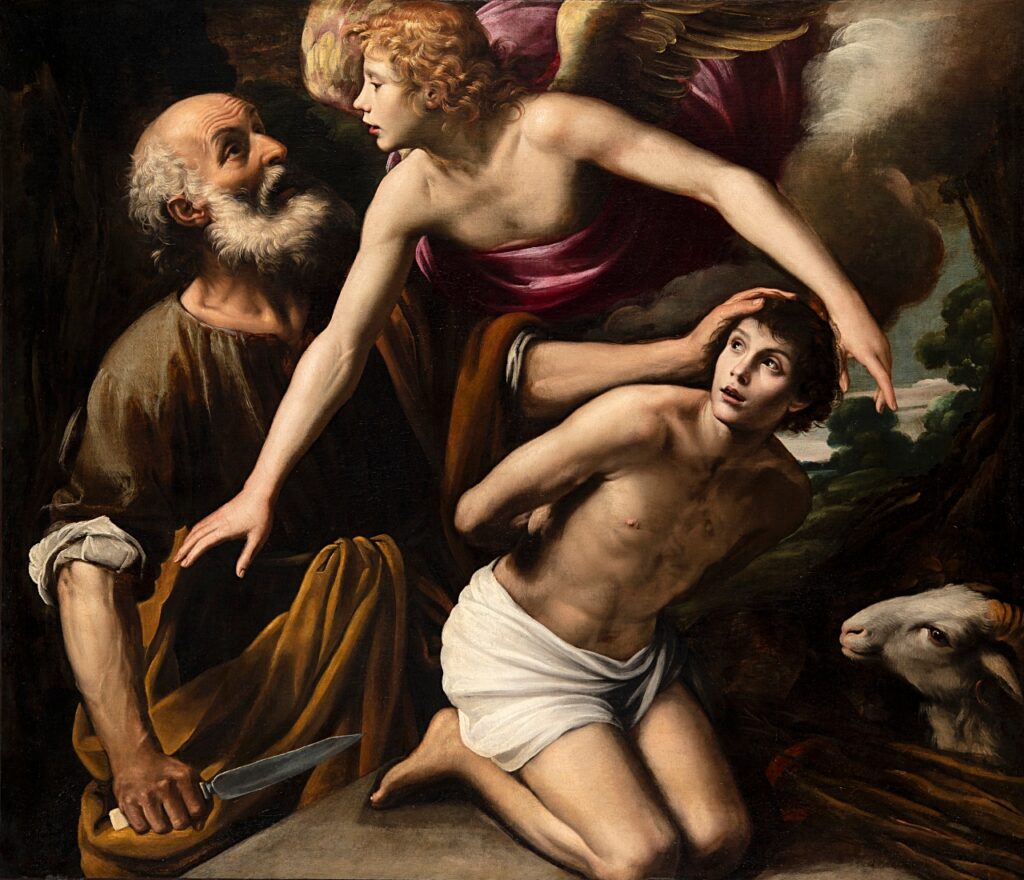
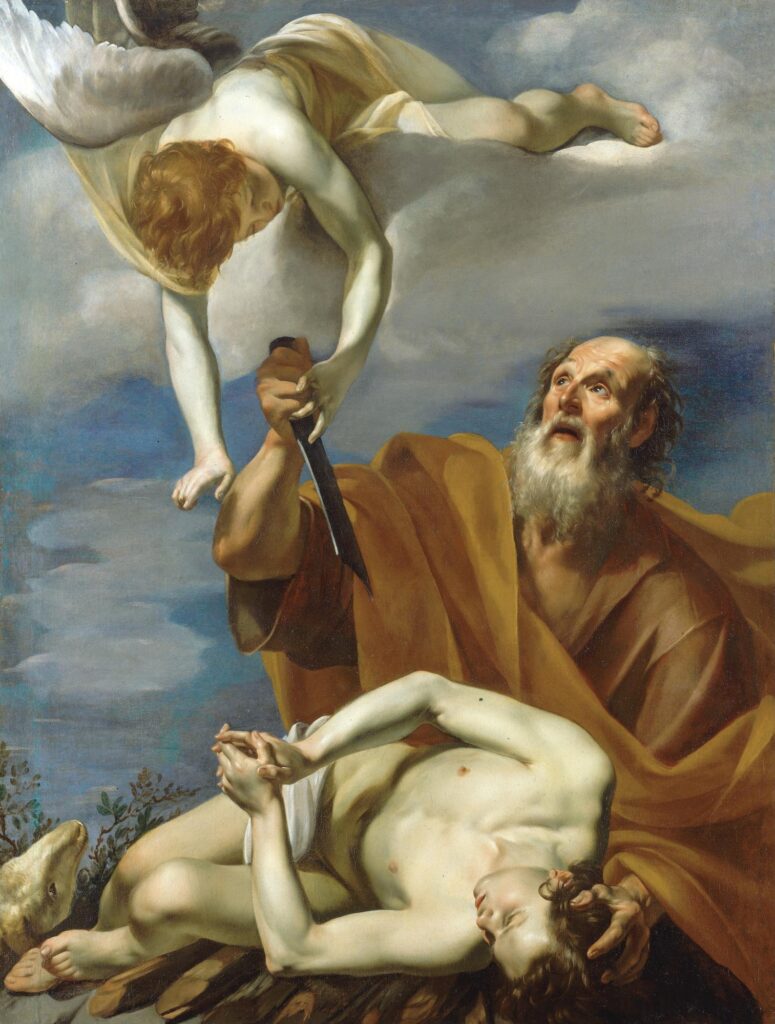
Notice how Issac and the angel are almost always depicted as beautiful youth bound by some mystical destiny, whereas dishevelled Abraham invariably appears as freshly escaped from Arkham Asylum for the Criminally Insane.
Various scholars suggest that the original story of Abraham and Isaac may have been of a completed human sacrifice later altered by redactors to substitute a ram for Isaac, and some traditions, including certain Jewish and Christian interpretations, maintain that Isaac actually was sacrificed. [source]
Caravaggio, circa 1603
Senile (120+) or schizofrenic, Abraham hears a voice commanding him to kill his only son. Without a moment’s reflection, the old man assumes this to be the voice of God and does not think twice of killing his own child in horific circumstances. For millennia to come, millions of Jewish, Muslim, and Christian children would hear that this disturbing story is a beautiful lesson about faith.
Domenichino
But let us look at the myth with fresh eyes and see if something more valuable can be extrapolated beyond the major religions’ creepy fascination with what is, at its core, an attempted murder.
Giuseppe Vermiglio
Isaac stands for the human soul bound to the material world and sacrificed on the altar of worldly religion. Abraham represents the priesthood of the false cosmic god, whose agenda is to keep us trapped in his realm. But there is hope for us in the form of a beautiful gardian angel, our Savior-twin, who, in the biblical myth, intervenes in extremis to rescue the soul from her terrifying ordeal. The unwritten part of the myth is the apotheosis of the liberated soul who evades the clutches of physicality to join the Boy God in perfect henosis.
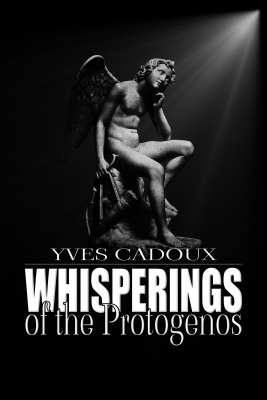
The mysteriosophy of the Savior-twin is articulated in my book.